
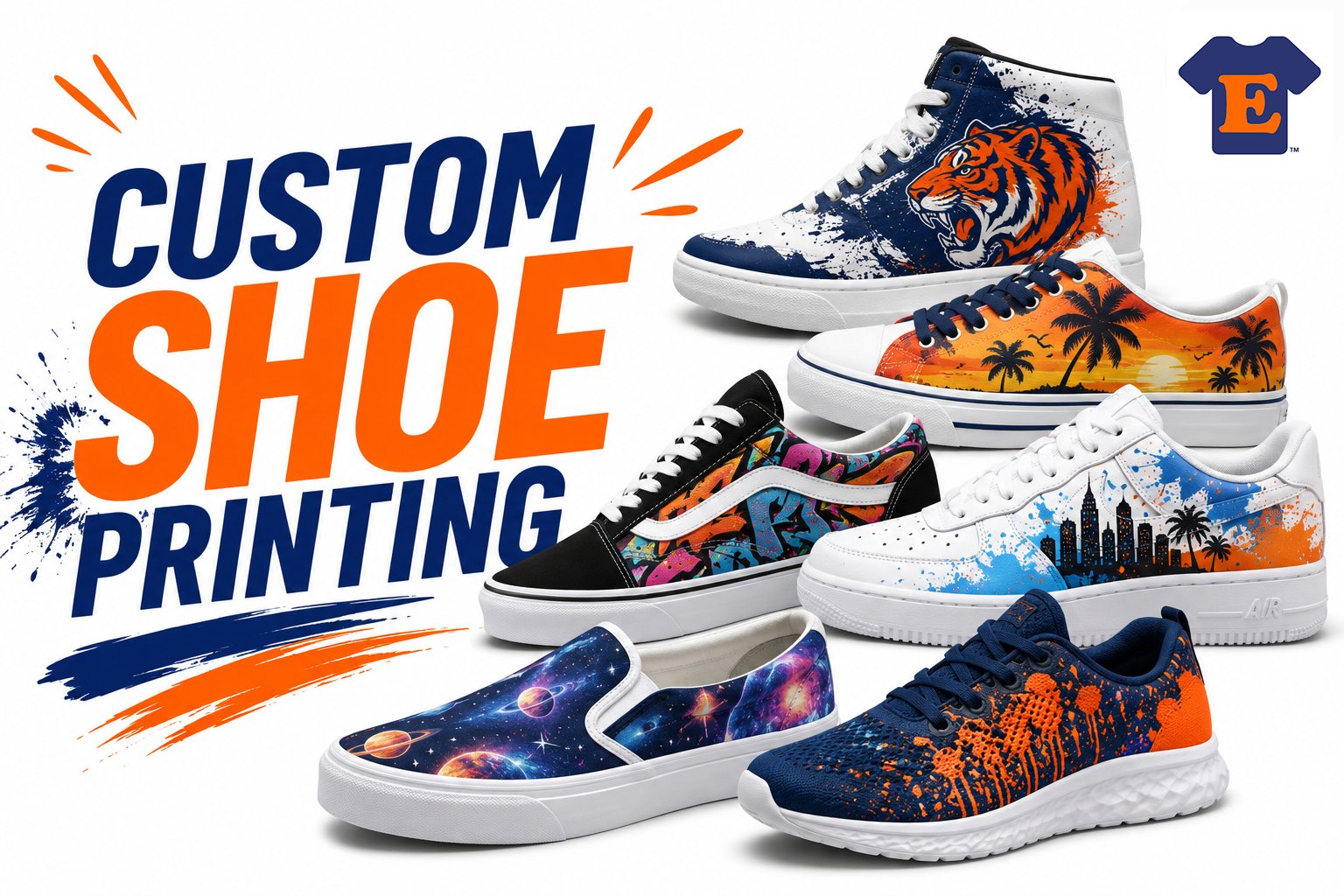
Custom shoe printing usually starts when a standard merch option won't do the job. A team wants footwear that matches its brand colors. A couple wants wedding sneakers that feel personal instead of generic. A creator wants a short run that looks clean on real shoes, not just in a mockup.
That's where the process gets real. Shoes aren't flat tees. They have seams, curves, mixed materials, textured panels, and heat-sensitive zones. A design can look sharp on screen and still fail on the wrong upper if the printer doesn't match the method to the material.
Your Vision on Footwear Why Custom Shoes Are Taking Over
Custom shoe printing has moved well beyond novelty. Brands use it for events, staff gear, and product launches. Wedding parties use it for matching keepsakes. Schools, teams, and creators use it when they want something more distinctive than another printed shirt.
The market reflects that shift. The global custom footwear market was estimated at US$744 million in 2023 and is projected to reach US$1,213 million by 2032, according to RunRepeat's custom shoes market data. That kind of growth tells you buyers aren't treating personalized shoes like a side category anymore.

For small companies, custom footwear can do two jobs at once. It creates a branded uniform piece, and it gives people something memorable to wear after the event ends. That's one reason footwear keeps showing up alongside broader custom apparel for small business strategies.
Why shoes hit differently
A printed shoe gets attention because it's unexpected. It is common to see logo shirts, but far fewer have seen coordinated sneakers at a trade show booth, launch party, or team event.
That difference matters when you want:
Brand visibility: Staff and ambassadors carry your identity through the room without looking over-uniformed.
Better merch value: Shoes feel more collectible than many disposable promo items.
Personal connection: A wedding date, team name, or campaign artwork turns footwear into a keepsake.
Practical rule: If the shoe has multiple materials, curves, or stitched overlays, the print method matters more than the design itself.
The customers who get the strongest results usually start with the right question. Not “Can you print this graphic?” but “What kind of shoe will hold this graphic cleanly?” That's the question that leads to durable work instead of costly mistakes.
Decoding the Tech Behind Custom Shoe Printing
The biggest misconception in custom shoe printing is that every print method works the same way on footwear. It doesn't. Shoes force a printer to deal with surface chemistry, curved panels, pressure control, and material limits that don't show up on a flat cotton shirt.

Why common apparel methods fall short
DTG works well on many garments because it prints directly into fabric. On shoes, that direct application becomes much harder to control because uppers are uneven, stitched, and often made from mixed materials.
Sublimation has a specific strength and a specific limitation. The material science is clear. Sublimation dye bonds only with polyester fibers, which makes it a poor fit for leather or canvas. DTF applies a design to transfer film first, then heat-presses it onto a wider set of surfaces including canvas, mesh, PU, and leather, as explained in this material-focused comparison of sublimation and DTF for footwear.
That's the dividing line most new buyers miss. Sublimation can look excellent on compatible polyester-based uppers, but many real-world shoes aren't built for it.
Where UV printing fits
UV printing solves a different problem. It cures ink directly onto the shoe surface using ultraviolet light, which makes it a non-contact option for rigid or semi-rigid materials like leather, rubber, TPU, PVC, and some fabrics. It's also strong for fine edges, logos, and small graphic elements because instant curing helps reduce ink flow.
That said, UV isn't always the practical everyday answer for general custom sneaker projects. It's useful when high-detail placement on certain surfaces matters most, especially for short-run work and specialty panels.
UV shines when edge definition matters. Mixed-material sneaker projects often need broader surface flexibility.
Why DTF is usually the working solution
For actual production on shoes, DTF is the method that solves the most problems at once. The design is printed to PET film, coated with adhesive powder, cured, and then transferred with heat and pressure. That sequence gives the printer more control before anything touches the shoe.
A DTF-first workflow makes sense when the order includes:
Canvas uppers: Good surface acceptance and strong visual payoff
Mesh panels: More forgiving than many buyers expect, if placement avoids unstable zones
PU and leather sections: Reachable when prep and pressure are handled correctly
Short runs and one-offs: Easier to manage than methods built around larger setup effort
For customers comparing methods, this is a useful deeper read on DTF vs DTG printing differences, especially if your project includes complex graphics rather than simple spot-color art.
The trade-off that matters most
No method is magic. DTF still depends on proper prep, proper heat, and proper pressure. But in custom shoe printing, versatility matters. Most buyers aren't bringing in all-polyester blank footwear made specifically for sublimation. They're bringing canvas sneakers, mixed synthetic trainers, leather accents, and fashion shoes with multiple panel types.
That's exactly where DTF earns its place. It gives the technician room to adapt the process to the shoe instead of forcing the shoe to fit the method.
The Right Print for Every Shoe Material
Material compatibility determines if a print appears crisp on day one and remains so after regular use. Experienced shoe printers separate themselves from trial-and-error hobby work through this specialized knowledge.
Industry guidance gets this point exactly right. A major challenge is understanding “what's heat resistant and what's not” and knowing which printable areas may melt or warp under application, as noted in this shoe customization guide from Screen Printing Magazine.
Canvas, mesh, leather, and synthetics all behave differently
Canvas is one of the more straightforward surfaces in custom shoe printing. It gives you a stable printable area and usually accepts transferred graphics well when the panel is flat enough and the prep is clean.
Mesh needs more judgment. Not all mesh is equal. Open, highly textured mesh can interrupt edge clarity, while tighter mesh can take a transfer more cleanly. Placement matters just as much as material.
Leather and PU create a different challenge. The issue isn't just getting the design onto the surface. It's getting adhesion without overcooking the panel or distorting the shape.
What experienced printers check first
Before any transfer goes down, the technician needs to evaluate:
Panel composition: Mixed uppers often have different responses across neighboring sections.
Heat tolerance: Some decorative pieces, coatings, and trims can't take the same application window as the main upper.
Panel geometry: Curves, toe rise, stitching lines, and sidewall transitions can break a design.
Wear zone: A lateral side panel behaves differently from a flex-heavy forefoot area.
The printable area isn't just where the art fits. It's where the material, pressure, and shape all agree.
Shoe Material and Printing Method Compatibility
| Shoe Material | DTF Printing Compatibility | Common Issues Avoided with DTF |
|---|---|---|
| Canvas | Strong practical fit | Better versatility than methods limited by fiber content |
| Mesh | Often workable with careful placement | Reduces the need to rely on direct print contact on uneven fabric |
| PU | Useful for many custom applications | Expands options beyond polyester-only methods |
| Leather | Common choice when properly prepped | Avoids the hard stop that sublimation runs into on non-polyester surfaces |
| Mixed-material sneakers | Usually the most realistic production route | Handles projects that combine different panel types on one shoe |
For buyers comparing transfer methods on apparel and accessories, this breakdown of sublimation printing vs heat transfer helps explain why material matching matters so much.
The mistake that causes most failures
Most adhesion problems don't start with the film. They start with the surface or the application. If the panel isn't prepped properly, if the pressure is inconsistent, or if the transfer doesn't settle into small creases and contours, the print has weak points from the beginning.
That's why shoe printing is hands-on work. The technician has to read the panel, not just run a recipe.
Artwork Tips for Flawless Shoe Designs
A shoe can carry bold artwork well, but only if the file is prepared for the physical shape of the footwear. Good art on the wrong scale will land on a seam, wrap into a crease, or lose detail across a textured panel.

Start with placement, not just graphics
The first artwork decision is size and location. On shoes, the side panel usually gives the cleanest read. Toe areas, lace zones, and sharply curved sections can work, but they need more careful scaling.
When artwork is submitted, the file should be measured against the actual printable area of the shoe. That sounds basic, but it's one of the most important production steps. A design that fits in digital space can still fail once stitching, eyelets, and panel transitions enter the picture.
File prep habits that help
A few file choices make the process smoother:
Vector art for logos: AI or EPS files keep edges cleaner when designs are resized.
High-resolution PNG for raster art: Useful when the design includes textures, fades, or layered illustration.
Clear background handling: Loose edges and accidental backgrounds become obvious on shoes fast.
Readable small text: If text is tiny, simplify it before production.
Some of the trickiest jobs involve fine text and compact logos. Small lettering can get lost if the panel texture fights the art. Skilled application makes a major difference here, especially on narrow areas like trims or laces.
Shop-floor advice: Small text isn't impossible on shoes. It just has to be designed for the substrate, not for a flat digital mockup.
Design around seams and curves
The strongest shoe art usually respects the construction of the shoe. That means using the panel break as part of the design instead of pretending it isn't there.
Good examples include:
Offset logo placement that avoids eyelet rows
Split graphics that intentionally follow panel changes
Pattern fills that tolerate slight contour variation better than rigid rectangular art
This video gives a useful visual reference for how printed sneaker graphics come together in practice.
Keep ordering simple from the start
If you're managing a team order or sending files while traveling, the TSE mobile app makes it easier to upload artwork, manage order details, and keep the project moving without a long back-and-forth. That matters when the deadline is tight and the design still needs final sizing for the shoe model.
The easier the file handoff, the faster production can focus on what matters. Print fit, application accuracy, and final finish.
Inspiring Use Cases for Custom Printed Shoes
Custom shoe printing works best when the footwear has a purpose beyond decoration. The strongest projects usually support a brand, unify a group, or mark an event people will remember.
Brand teams and trade show staff
A startup team walking into a conference in matching printed sneakers creates a cleaner impression than a table full of disconnected outfits. Shoes pull the brand into the full uniform without making the staff look overproduced.
That works especially well for:
Trade show crews who stand all day and still need visible branding
Launch events where the footwear becomes part of the visual identity
Content teams shooting social clips where every detail ends up on camera
Weddings, parties, and milestone events
Wedding sneakers have become a practical custom category because people want footwear they can dance in. A couple might use names, dates, florals, or a small monogram. A wedding party might coordinate the same artwork across multiple pairs while changing individual names or roles.
The same logic carries into birthdays, reunions, and anniversary events. Matching shoes feel more personal than off-the-shelf party gear, and guests often keep them instead of tossing them in a drawer.
Teams, creators, and merch drops
A school club, sports team, or performing group can use custom shoes to create identity. A creator can turn a design into a limited merch release that feels more exclusive than standard apparel.
Some of the most effective uses include:
Spirit wear: Shoes tied to school colors or club branding
Fundraising merch: Footwear that feels premium enough to support a campaign
Artist drops: Small-batch pairs built around a single illustration or logo system
Band and performance gear: Matching stage footwear that reads well in photos and live appearances
The common thread is simple. Good custom shoes don't just display art. They support a moment, a message, or a group identity.
How to Order Your Custom Shoes from T-Shirt Envy
Ordering custom shoe printing should feel straightforward, especially when the deadline is close. The smoothest jobs start with a clear shoe choice, usable artwork, and a realistic understanding of where the design should live on the upper.
The order flow that saves time
Start by submitting the artwork and the shoe details together. Include the exact shoe model if you already have it, because panel shape matters. If you're still deciding, send photos of the shoe from both sides so the printable areas can be evaluated before production.
After that, the file gets sized to the usable panel. Measurements matter here. The design has to fit as expected once it's applied, not just look centered in a mockup.
A practical production flow usually looks like this:
Choose the shoe that matches the event, brand, or intended wear.
Upload your art and note placement preferences.
Confirm panel sizing once the printable area is reviewed.
Approve the layout before transfer production begins.
Move to print and application with the correct prep, heat, and pressure.
What to ask before production starts
Ask direct questions. Can the design avoid the seam? Will small text still read clearly? Is the selected panel a heavy flex point? These questions prevent disappointment later.
If you're a creator planning branded products around your artwork, it also helps to think beyond the physical item. Many creators pair merch with content strategy, digital offers, or UGC campaigns. If that's part of your model, this guide on how to monetize content via Famcut.com creator resources is a useful companion read.
Where fast ordering matters
For teams, organizers, and business buyers, speed usually depends on clean approvals. The T-Shirt Envy workflow includes website ordering plus the app, and the brand's operating model emphasizes Quick, Quality, Printing!™ for rush custom work, in-house design support, and no-minimum flexibility based on the service details provided by the company.
If you're handling recurring group orders, that kind of setup is most useful when the artwork is already dialed in and reorders need less revision.
Care Instructions and Frequently Asked Questions
A custom shoe print lasts longer when the application is done correctly and the shoe is treated like printed footwear, not like a generic blank. Most failures people blame on the transfer begin with bad prep, weak pressure, uneven heat, or poor aftercare.

How to care for printed shoes
The safest approach is gentle cleaning and common sense.
Use a soft cloth: Wipe surface dirt instead of scrubbing aggressively.
Avoid soaking: Too much water can work into edges and stress the print area.
Skip harsh chemicals: Strong cleaners can affect both the print and the shoe finish.
Let them air dry: Direct high heat isn't your friend after the print is applied.
If the shoes are worn in messy conditions, clean them sooner rather than later. Dirt trapped along print edges creates avoidable wear.
Why professional application matters
Adhesion issues usually come from three places. The surface wasn't prepared properly, the pressure wasn't right, or the transfer didn't settle fully into the small contours and crevices of the shoe.
That last part matters more than many realize. If a transfer bridges over a recess instead of sitting into it correctly, dirt and moisture can work underneath during wear and cleaning.
Proper surface prep and controlled application do more for durability than any flashy design effect ever will.
Frequently asked questions
Can every shoe be printed?
No. Some shoes have surfaces, coatings, or construction details that make clean application unreliable. Mixed-material shoes can still work, but each panel needs to be judged individually.
What parts of the shoe are easiest to customize?
Side panels are usually the most practical. Lace areas, narrow trims, and heavily curved sections can work, but they require more technical handling.
Is very small text possible?
Yes, but it needs smart artwork and careful application. Tiny text is one of the first places poor prep shows up.
What affects turnaround?
Artwork readiness, shoe type, placement complexity, and approval speed all affect turnaround. Clean files and quick decisions keep the job moving.
What affects price?
Shoe material, design complexity, print location, and whether the order is a single pair or a larger group all influence the final quote.
Start your custom shoe printing order with T-Shirt Envy today. Upload your design, review your shoe options, and use the TSE mobile app to keep your project moving from artwork to production with less friction. Experience Quick, Quality, Printing!™ on your next pair.


