
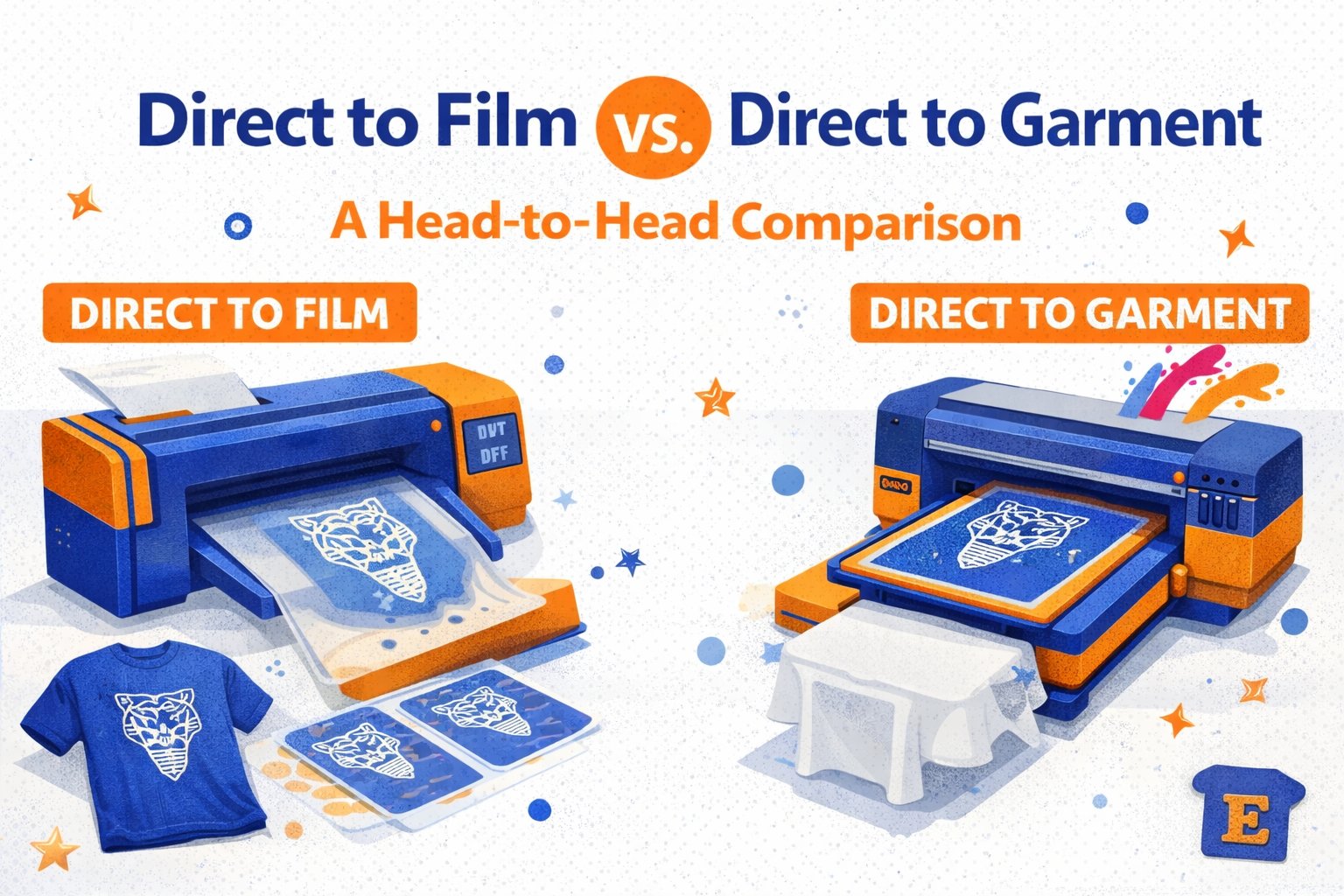
So, you’re trying to decide between direct to film vs direct to garment printing. The best choice really comes down to what you’re making. Here’s the short version: DTG is your go-to for soft, breathable designs on cotton, especially for detailed art and photos. On the other hand, DTF offers incredible versatility, letting you create vibrant, durable prints on nearly any fabric, including polyester, nylon, and tricky blends.
Choosing Your Custom Apparel Printing Method

Stepping into the world of custom apparel can feel overwhelming, but it gets a lot easier once you understand the key strengths of Direct to Film (DTF) and Direct to Garment (DTG). As an industry leader, TShirtEnvy has perfected both techniques. Both are excellent digital printing methods that produce high-quality results, but they’re designed for different jobs.
Making the right call affects everything—from how the print feels on the shirt to its long-term durability and the types of fabric you can use. This guide will walk you through the practical, real-world differences so you can confidently pick the perfect method for your brand, event, or creative vision and get the exact results you’re looking for.
DTF vs DTG At A Glance
Before we dive into the nitty-gritty, this table gives you a quick snapshot of the most important differences between the two methods. Think of it as a handy cheat sheet to help you get your bearings.
For an even deeper dive, you can always check out our guide on choosing a print method to explore all the options available at TShirtEnvy.
| Feature | Direct to Film (DTF) | Direct to Garment (DTG) |
|---|---|---|
| Best Fabric | Polyester, cotton, blends, nylon, leather | 100% cotton or high-cotton blends |
| Print Feel | Sits on top of the fabric; smooth finish | Soft and breathable; ink is part of the fabric |
| Color Vibrancy | Extremely vibrant, especially on darks | Very vibrant, with excellent detail |
| Best For | Bold logos, athletic wear, diverse materials | Photorealistic art, complex designs on tees |
| Durability | Excellent; highly flexible and crack-resistant | Very durable; ink is chemically bonded to cotton |
This at-a-glance view should give you a solid starting point. Now, let’s break down what these differences actually mean for your specific project.
Understanding The Core Printing Technology

When you’re weighing direct to film vs direct to garment, it helps to think of them as two different roads leading to the same destination: a great-looking custom shirt. Both use sophisticated digital printing, but how they get your design from a file onto the fabric is completely different.
At TShirtEnvy, we’ve gotten both methods down to a science. Our expertise allows us to select the perfect technique for your specific project, whether it’s a rush job for a corporate event or a complex, full-color piece for your brand. It’s a huge part of our promise to deliver fast, high-quality custom printing. Knowing how they work gives you a peek behind the curtain at the craft involved.
How Direct To Film (DTF) Printing Works
Think of Direct to Film (DTF) as a two-stage process. First, our team creates a high-quality, durable transfer, and then we apply it to your garment. This indirect approach is what makes DTF so incredibly versatile and reliable.
Here’s a play-by-play of what happens:
Printing on Film: Your design is printed onto a special PET film. The printer cleverly lays down all the colors first, then finishes with a solid white ink layer. This white base is the key to making colors pop on any fabric.
Applying Adhesive Powder: While the ink is still wet, we coat the print with a fine adhesive powder. It only sticks to the inked areas, creating the glue that will eventually bond the design to the shirt.
Curing the Transfer: The film is then sent through a curing unit, which melts the powder into a smooth, pliable layer. The transfer is now ready for action.
Heat Press Application: Finally, we place the finished transfer onto the garment and use a heat press. The combination of intense heat and pressure permanently fuses the design to the fabric. We peel away the film, and your graphic is left behind—crisp, vibrant, and ready to wear.
This transfer-based method is DTF’s superpower. Because the design isn’t printed directly on the garment, we can apply it to almost anything—polyester jerseys, nylon jackets, hats, bags, you name it.
The industry has taken notice. The global Direct to Film (DTF) printing market, valued at USD 2,720 million in 2024, is expected to hit USD 3,920 million by 2030. This growth is all about the demand for on-demand, personalized gear. For us, DTF is a game-changer, letting us put bold, beautiful prints on a huge variety of materials without needing special pre-treatments. You can discover more about this expanding market and see why it’s making such waves.
How Direct To Garment (DTG) Printing Works
Direct to Garment (DTG), on the other hand, works pretty much like your desktop inkjet printer, but it’s built for fabric. The name says it all: we print the ink directly onto the shirt.
This method is more straightforward but relies heavily on proper fabric preparation to get that signature soft feel and incredible detail we all love.
Here’s the breakdown of the DTG process:
Pre-Treatment: Before anything else, the garment gets a light spray of a pre-treatment solution. This is essential, as it creates a perfect surface for the water-based inks to bond with, keeping them from just soaking into the fibers. It’s the secret to sharp, vibrant colors.
Direct Inkjet Printing: The pre-treated shirt is carefully loaded onto the DTG printer. The print heads then glide across the fabric, precisely applying ink directly onto the garment to build your design, drop by drop.
Final Curing: Once printed, the shirt goes into a heat press or conveyor dryer. This heat cures the ink, permanently setting it into the cotton fibers so it won’t wash out.
The result is a print that feels incredibly soft because the ink literally becomes part of the fabric. It’s the go-to method for photorealistic images and designs with tons of detail, especially on cotton. For a deeper dive, check out our guide on DTG printing and its sweet spots.
Comparing Print Feel, Vibrancy, And Detail

Ultimately, the look and feel of the final print are what really count. Even though both DTF and DTG are fantastic digital printing methods, they create noticeably different results in texture, color intensity, and how well they reproduce details. Knowing the difference between direct to film vs direct to garment is crucial for getting the exact result you want.
Think about what matters most for your project. Are you aiming for a soft, premium finish that feels like it’s part of the fabric? Or do you need a super-bright, unmissable logo for a promotional event? Let’s get into the specifics of how each method performs.
Print Feel And Texture
The first thing you’ll notice when comparing these two is the “hand”—that’s our industry term for how the print feels on the shirt.
Direct to Garment printing is famous for its soft-hand feel. The water-based inks soak right into the cotton fibers, so the print truly becomes one with the fabric. This gives you a breathable, lightweight texture that’s ideal for large, detailed designs where comfort is everything.
Direct to Film is a different story. With DTF, the print sits on top of the fabric, bonded by an adhesive. While our modern DTF transfers are remarkably thin and flexible, they do have a smoother, more solid feel than a DTG print. This isn’t a bad thing; it’s a specific finish that’s perfect for creating crisp, standalone logos on materials like polyester or fleece.
Color Vibrancy And Opacity
This is where DTF really shines. Because the inks are first printed onto a special film with a white base layer, the colors come out incredibly bright and solid, no matter what color the garment is.
DTF for Dark Garments: DTF is the undisputed winner for getting vibrant, punchy colors on black, navy, or any dark-colored apparel. That white underbase acts as a perfect primer, making sure the fabric’s color doesn’t seep through and mute your design.
DTG Color Profile: DTG also creates beautiful, rich colors. However, since the ink absorbs into the fabric itself, the final vibrancy can be subtly affected by the garment’s color and texture, even when we apply a pre-treatment.
When maximum “pop” and opacity are non-negotiable, DTF has the clear advantage. A bright yellow safety logo on a black vest is a textbook example of a job made for DTF.
Detail And Photorealism
For designs with intricate details, smooth gradients, or photorealistic images, DTG is usually the way to go, especially on 100% cotton.
The technology jets millions of tiny ink droplets directly onto the garment, which allows for stunningly smooth color blending and super-fine lines. This makes it the top choice for artists and photographers who want to print high-resolution images without losing any of the original subtlety. You can even try it yourself—upload a photo right from your phone using the TSE mobile app and see a preview on a shirt.
DTF also handles detail well, but its real strength is in reproducing crisp vector graphics and bold, clean text. It’s perfect for logos and designs with hard, defined edges, ensuring every line is sharp and precise.
This specialization in high-quality detail is a big reason why the DTG market keeps expanding. Valued at USD 244 million in 2023, the global DTG machine market is forecast to reach USD 710 million by 2030. That growth is driven by people like you who demand top-notch, personalized apparel. As you can discover more insights about the DTG printing market’s growth, you’ll see it’s all about bringing creative visions to life with incredible quality—the exact standard T-Shirt Envy delivers with every order.
How Fabric And Durability Stack Up
When you’re trying to decide between direct to film vs direct to garment, the single most important factor is often the garment’s material. This is where the two methods really part ways. One is a specialist for natural fibers, while the other is a jack-of-all-trades that works on almost anything you can throw at it.
Of course, how the print holds up over time is just as critical. You need apparel that can survive the wash cycle without cracking, peeling, or fading away. Both DTG and DTF offer fantastic durability when cared for, but how they perform is tied directly to the fabric and how the ink is applied.
The Great Fabric Divide
This is where your fabric choice will pretty much make the decision for you. DTG is the undisputed king of 100% cotton and blends with a high cotton content. Its water-based inks are designed to chemically bond with natural fibers, soaking in to create a seamless, breathable, and long-lasting print.
The problem? DTG’s performance falls off a cliff when you move to synthetic materials. The inks just don’t absorb into polyester or nylon fibers the right way, leaving you with weak colors and prints that won’t survive the wash.
If your project is all about 100% cotton and you’re aiming for that super-soft, no-feel print, DTG is the clear winner. Nothing beats its ability to dye the fibers directly on that specific fabric.
DTF, on the other hand, completely changes the game. Since the design is first printed onto a film and then applied as a transfer using heat, it doesn’t really care what the fabric is made of. The adhesive on the back of the transfer bonds securely to a massive range of materials.
This makes DTF the perfect choice for:
Polyester: Think athletic jerseys, performance gear, and moisture-wicking shirts.
Blends: Works flawlessly on common 50/50 cotton-poly shirts, cozy tri-blends, and fleece hoodies.
Nylon and Leather: You can even print on tricky items like jackets, bags, and other unconventional gear.
Any Color Garment: It delivers bright, totally opaque colors on both light and dark fabrics without a problem.
A Closer Look at Durability And Longevity
When it comes to durability, both methods produce professional-quality prints that can last the lifetime of the garment if you take care of them. But they show their toughness in different ways.
DTF transfers are famous for their amazing elasticity. The print can stretch and rebound with the fabric without cracking, which is a huge advantage for activewear and anything that gets a lot of movement. This flexibility makes it ideal for sports uniforms or performance apparel. Here at T-Shirt Envy, we’ve honed our process to create a print that’s both tough and flexible. You can learn more about our advanced methods in our guide to T-Shirt Envy’s custom DTF transfers.
On the other hand, a properly cured DTG print on 100% cotton is also incredibly tough. Since the ink becomes part of the fabric itself, it can’t crack or peel. What you’ll see instead is a gentle, even fade over many, many washes—much like a favorite vintage band tee. It’s a different kind of durability, one that’s integrated right into the shirt. This is where T-Shirt Envy’s promise of Quick, Quality, Printing!™ really shines through, as we guarantee every DTG print is perfectly cured for maximum life.
To give you a clearer picture, here’s how the two methods compare side-by-side when it comes to fabric performance and durability.
DTF vs DTG Fabric Performance And Durability
| Attribute | Direct to Film (DTF) | Direct to Garment (DTG) |
|---|---|---|
| Fabric Compatibility | Excellent. Works on cotton, polyester, blends, nylon, leather, and more. | Limited. Best for 100% cotton; struggles with polyester and synthetics. |
| Ideal Garments | Sports jerseys, performance wear, hoodies, hats, bags, any blended fabric. | Premium cotton t-shirts, hoodies, and tote bags where a soft feel is key. |
| Wash Durability | Excellent. Highly resistant to cracking and peeling. Rated for 50+ washes. | Good to Excellent. Fades gently over time with the fabric. No cracking. |
| Print Feel | A soft, flexible layer on top of the fabric. Noticeable but not heavy. | Ultra-soft and breathable. The ink soaks into the fibers, leaving almost no feel. |
This table shows why DTF has become such a popular choice for its versatility, while DTG remains the go-to for that premium, soft-hand feel on pure cotton.
The growing preference for versatile printing is backed by hard data. In the U.S. digital textile printing market, processes related to Direct to Fabric—which shares its base technology with DTF—made up over 67% of the market share in 2023. This market, valued at USD 226.2 million in 2023, is expected to grow substantially, highlighting the industry’s move toward flexible, multi-fabric printing. You can check out the full research on U.S. digital textile printing to see how this trend is shaping the future of custom apparel. This data is exactly why we’ve become experts in DTF, making it easy for you to manage bulk orders for any material right from the TSE mobile app.
Cost, Speed, and Order Size: Which Method Makes Sense for You?
When you’re ordering custom apparel for your business or creative project, the final cost and how quickly you get your shirts are just as important as how the print looks. Both Direct to Garment (DTG) and Direct to Film (DTF) are fantastic, modern printing methods, but they shine in different situations. The right choice often comes down to simple business math: your budget, your deadline, and how many shirts you need.
So, which one is cheaper or faster? The answer isn’t always straightforward—it really depends on the job. Are you ordering one killer shirt for a birthday gift, or are you outfitting your entire staff for a trade show? Let’s get into the nitty-gritty of how costs, production speed, and order volume play out.
Per-Unit Costs and Setup Explained
With Direct to Garment printing, what you see is what you get, especially when it comes to cost. Because the whole process is digital—think of it like a highly advanced inkjet printer for fabric—there are virtually no setup costs. We can take your design, pop a shirt on the platen, and print it directly. It’s that simple.
This makes DTG unbeatable for:
-
One-Offs and No-Minimum Orders: If you just need a single shirt with a full-color photo, DTG is hands-down the most affordable option.
-
Quick-Turn Jobs: The lack of setup means we can go from file to finished shirt incredibly fast, perfect for those last-minute emergencies.
-
Testing a New Idea: Want to see how a new design looks on a real shirt before committing to a big run? DTG is your go-to for prototyping.
Direct to Film, on the other hand, involves a couple of extra steps. We first print the design onto a special film, apply an adhesive powder, and cure it. While this isn’t nearly as involved as traditional screen printing, that little bit of prep work means DTF truly comes alive on small-to-medium sized orders.
The real magic of DTF is a technique called “ganging.” This is where we arrange multiple designs—like a bunch of left-chest logos or sleeve graphics—onto one large transfer sheet. By printing them all at once, we slash the per-unit cost, making it incredibly efficient for larger quantities of the same artwork.
This ability to batch-produce transfers makes DTF a workhorse for orders anywhere from 20 to a few hundred pieces, offering an amazing balance of professional quality and smart economics.
Turnaround Time and Production Speed
Here at TShirtEnvy, our entire reputation is built on fast turnaround times and reliability. Both DTG and DTF are quick, but they’re quick in different ways.
Think of DTG as the sprinter. It’s the master of on-demand, single-item production. We can have a fully cured, ready-to-wear shirt with a complex, vibrant design in just a matter of minutes. This is exactly why we can confidently offer rush and even same-day services for your colorful cotton apparel.
DTF, however, is more like a marathon runner—it finds its rhythm and speed over distance. While the first print takes a few steps, the real velocity comes from the workflow. Once the transfers are printed and ganged, applying them to the actual garments is a rapid-fire process that takes just seconds per shirt. This assembly-line efficiency lets us press dozens of shirts in the time it might take to print just a few with DTG, especially on tricky fabrics like polyester.
The Best Fit for Your Order Size
So, when it comes to the direct to film vs direct to garment decision, how do you choose based on quantity? It’s pretty simple.
Go with Direct to Garment (DTG) if you need:
-
Very Small Orders (1-20 pieces): It’s the perfect choice for personal gifts, brand samples, or a small, exclusive drop for your small business.
-
Lots of Different Designs: If every shirt in your small batch is unique, DTG’s no-setup advantage is the only way to go.
Choose Direct to Film (DTF) when you’re ordering:
-
Small to Medium Batches (20-500 pieces): This is the sweet spot for corporate apparel, team uniforms, event merch, and growing brands.
-
One Design on Many Items: When you need the same logo on a whole run of shirts, DTF’s ganging efficiency gives you the best bang for your buck.
We’ve built our entire system to make this easy for you. Whether you’re uploading a quick photo from your phone using the TSE mobile app or coordinating a bulk order from your office computer, we’ll automatically guide you toward the most efficient and cost-effective printing method to hit your deadline and budget.
Making The Right Choice For Your Project
So, we’ve thrown a lot of technical details at you. Now, let’s get down to what really matters: how to choose the right print method for your specific project. When you’re trying to decide between direct to film vs direct to garment, the best answer really just depends on what you’re trying to accomplish. Your fabric, your artwork, and even the event you’re planning for will all point you in the right direction.
To make it even easier, we put together this simple flowchart. Think of it as a decision-making map that guides you to the perfect print technology based on your order size, design, and budget.

Following this tree helps you see how different factors lead to the most efficient and effective choice, ensuring you’re thrilled with the final product.
Scenarios For Choosing DTG
Direct to Garment printing is our premium option when the feel of the shirt and the subtlety of the art are top priorities. You’ll want to lean on DTG for projects like these:
-
The Artist’s Limited Edition Drop: If you’re an artist or creator launching a small, exclusive run of apparel, this is for you. Your design might be a complex, multi-color piece or even a high-resolution photo. Printing on 100% cotton shirts with DTG gives you that soft-hand feel everyone loves while capturing every single gradient and detail flawlessly.
-
The Memorable Family Reunion: Planning a reunion and want shirts with a favorite family photo? DTG is perfect for this. It excels at reproducing photographic images on cotton garments, creating a beautiful, wearable memory that feels comfortable, not stiff.
Scenarios For Choosing DTF
Direct to Film is the workhorse. It’s your best bet when you need vibrant color, unmatched durability, and the freedom to print on almost anything. DTF is the clear winner in these situations:
-
The Corporate Trade Show Team: You’re getting your team ready for a big event and need them looking sharp in branded polyester performance polos. DTF is the ideal choice. It produces a crisp, vibrant logo that holds up well and looks incredibly professional on synthetic materials.
-
The School Spirit Wear Fundraiser: You’re in charge of a fundraiser and have to print the school mascot on everything from cotton t-shirts and blended hoodies to nylon drawstring bags. DTF shines here. We can “gang” or group dozens of logos onto a single film sheet, making it incredibly efficient and budget-friendly for a large order with lots of different item types.
The core takeaway is simple: For soft, artistic prints on cotton, choose DTG. For bold, versatile prints on anything else, choose DTF. Keeping this in mind will help you pick the right method with confidence, every single time.
Whether you’re launching a brand, outfitting your crew, or planning an event, T-Shirt Envy has the tools and the team to execute your vision perfectly. Our whole philosophy is built on delivering reliable, premium custom apparel without hassle.
Ready to make it happen? It’s never been easier. Just download the TSE mobile app to upload your design and order from anywhere, or start your custom project on our site today. Let’s create something great together.
Got Questions? We’ve Got Answers.
Even after laying it all out, you probably have a few specific questions bubbling up as you think about your project. It’s totally normal. Here are the answers to the most common questions we get from customers trying to nail down their choice between DTF and DTG.
Which Method Is Better for Full-Color Photographs?
If you’re printing a detailed, full-color photograph onto a 100% cotton shirt, Direct to Garment (DTG) is your winner, hands down. DTG printers are built to handle millions of colors, capturing those subtle gradients and fine details that make a photo look like a photo. The ink soaks right into the cotton fibers, so the print feels soft and breathable—almost like it’s part of the shirt itself.
DTF can absolutely handle vibrant colors, but the process creates a transfer that sits on top of the fabric. For a wearable photo, most people prefer the “no-feel” finish that DTG provides, especially for things like portraits or intricate artwork on cotton. It just feels more integrated.
Can I Print On Items Like Hats And Bags?
You sure can, and this is where Direct to Film (DTF) truly shines. Because we’re essentially creating a high-quality, heat-applied transfer, we can press it onto all sorts of materials and items that won’t lie flat in a DTG printer. Think hats, backpacks, nylon jackets, and other tricky items.
DTG is really meant for flat apparel like t-shirts and hoodies. The amazing flexibility of DTF is exactly why we use it at T-Shirt Envy to put logos and designs on a huge range of gear beyond just shirts. It’s a key part of how we deliver our Quick, Quality, Printing!™ promise on almost anything you can think of.
Are The Artwork Requirements Different?
Not really, but there’s one critical detail for both: a transparent background. Your artwork should always be high-resolution—300 DPI is the gold standard—but that transparent background is what prevents us from printing a big, solid box around your design. It keeps everything looking clean and professional.
And here’s the best part: you don’t need to be a graphic designer. Just upload your artwork file through the TSE mobile app or on our website. Our in-house design team personally reviews every single file to make sure it’s optimized perfectly for printing. We’ll handle the technical stuff to guarantee your final product looks fantastic.
Ready to see your design in print? Let’s make it happen with the speed and quality T-Shirt Envy is known for. Start your custom order today!


