
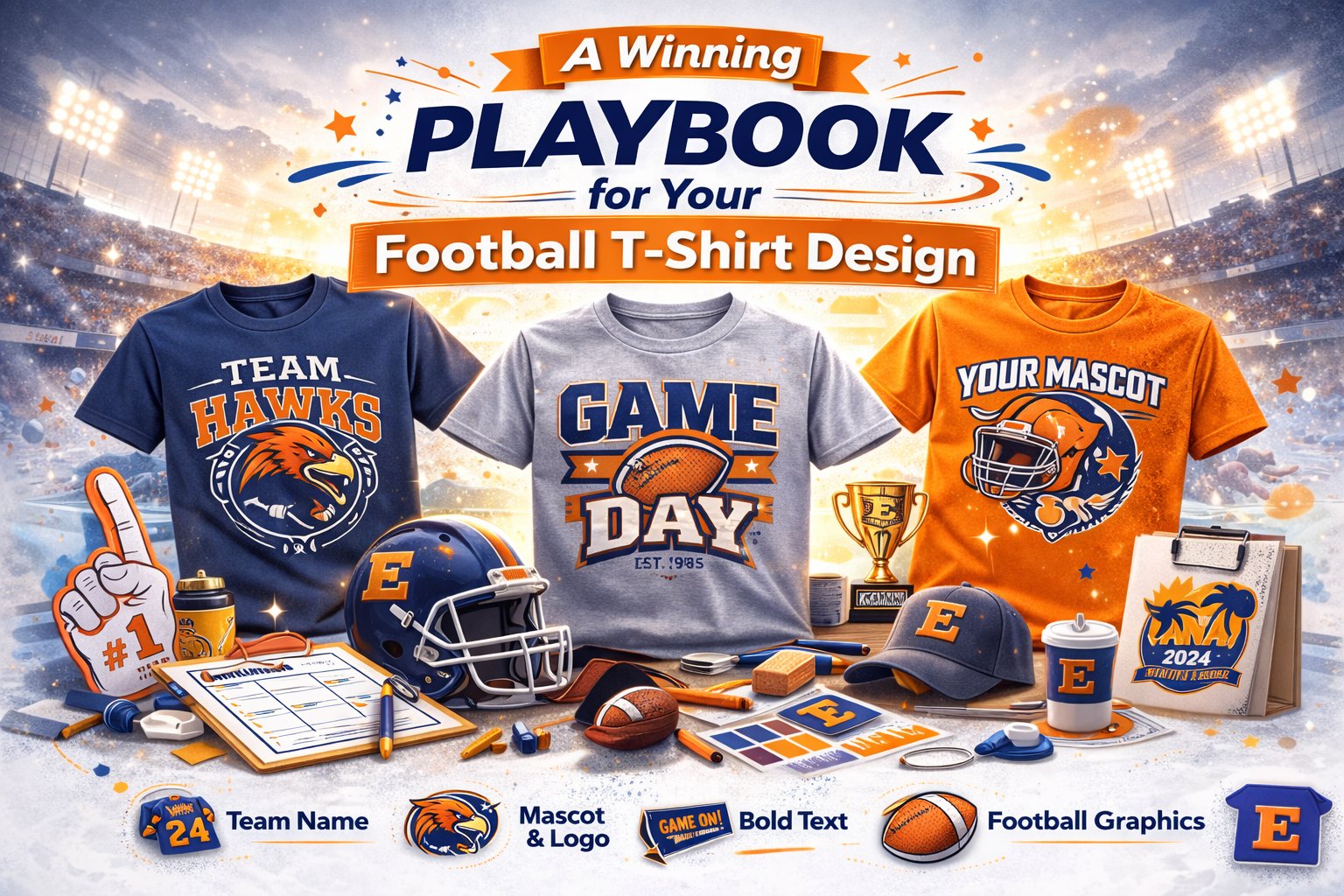
A truly powerful football t-shirt design is so much more than just fabric and ink. It’s a statement of loyalty, a symbol of unity, and a wearable piece of team spirit. The right design connects fans, boosts morale, and can turn any scattered group into a unified force, making T-Shirt Envy the go-to solution for creators and businesses who need fast, reliable, premium custom apparel.
From Kickoff to Masterpiece: Your Design Playbook

The energy around football is absolutely electric. In cities with deep football roots like Tallahassee, the energy revolves around Florida State Seminoles football and Florida A&M Rattlers football—two powerhouse programs with loyal fan bases that show up strong every season. Local pride also runs deep at the high school level with programs like North Florida Christian School and James S. Rickards High School.
Down in Tampa, football fans rally behind the Tampa Bay Buccaneers, creating an electric atmosphere on game days throughout the city. A great football shirt design captures this incredible energy and turns it into something you can wear. It stops being just fan gear and becomes a symbol of belonging that connects entire communities.
More Than Just a Shirt
A well-designed shirt becomes part of the experience, whether you’re gearing up for a college rivalry weekend, a Friday night under the lights, or an NFL showdown. But these shirts do more than just show support; they serve real, practical purposes for a wide range of groups. Customers can get custom replica jerseys made the same day for a last-minute game or event.
We also create custom jerseys for corporate events, tailgates, brand activations, and watch parties—personalized with names, numbers, company logos, or themed designs. From the stadium to the boardroom watch party, your crew can show up looking game-ready and united.
Your Ultimate Design Guide
Consider this your complete playbook for creating a winning football t shirt design. We’ll walk you through every single play, from brainstorming initial concepts all the way to preparing a flawless, print-ready file. Whether you’re a seasoned designer or this is your first time creating a shirt, we’ll give you the insights you need to get it right.
You'll learn how to craft a design that truly resonates, whether it’s for:
- Local Teams: Uniting players and fans from high school to college.
- Corporate Events: Building team spirit at company tailgates and brand activations.
- Fundraising Campaigns: Creating awesome merchandise that sells out and supports your cause.
- Fan Groups: Designing memorable gear for watch parties that captures all the game-day excitement.
By the end, you’ll know exactly how to create stunning apparel that stands out in a crowd. And when you're ready to bring your ideas to life, you can upload them instantly through the TSE mobile app, making the whole process faster than a 40-yard dash.
Let's dive in and start crafting a design that truly captures the spirit of the game.
Building Your Design Concept and Strategy

Every great football t shirt design starts with a solid game plan. Long before you pick a single color or font, you have to nail down the most important question: who is this shirt really for? The answer to that question drives every single decision you’ll make.
A shirt for a high school team’s spirit week is going to feel completely different than one for a corporate tailgate or a fan club’s watch party. Each group has its own story and expectations. Your first move is to figure out your mission.
Define Your Audience and Purpose
Get specific right away. Are you designing a unified look for a local business sponsoring a team? Or maybe you're creating a limited-run shirt for a die-hard fan group. The purpose completely shapes the design.
A corporate sponsor, for instance, will likely want a clean, professional design that puts their logo front-and-center alongside some team elements. On the other hand, a fan club might go for something edgier—a design with an inside joke or a bold slogan that only true supporters get.
Think about these real-world scenarios:
- High School Spirit Wear: The main goal here is pure school pride. Designs need to be loud, full of energy, and easy to spot from the bleachers. Stick to official school colors and mascots.
- Corporate Tailgate: This is all about team building with a side of brand visibility. The design should be cool enough that employees actually want to wear it, mixing company branding with subtle football motifs.
- Fundraising Merchandise: Here, the design has to sell. It needs broad appeal and an emotional hook that connects people to the cause or team they're supporting.
Brainstorm Compelling Design Themes
Once you know who you're designing for, it's time to get creative. Don't feel like you have to play it safe. While it’s smart to look at pro team jerseys for inspiration, your goal is to create something that stands on its own.
A powerful concept is the foundation of a memorable design. Think about the story you want to tell. Does your football t-shirt design reflect your company’s innovative spirit, a team's relentless drive, or the shared history of a fan community?
Here are a few popular themes to get the ideas flowing:
- Retro-Inspired Looks: Tap into nostalgia with designs that feel like they're from football's golden age. Think distressed logos, old-school fonts, and classic color combos.
- Clean and Modern Aesthetics: A minimalist approach can be incredibly powerful. Go for sharp lines, simple shapes, and a tight color palette for a sophisticated vibe.
- Hyper-Local Pride: Center your design around something that resonates with the local community—city skylines, area codes, or neighborhood landmarks all work great.
The appetite for football apparel is huge and only getting bigger. The global market was valued at USD 13.46 billion in 2026 and is on track to hit USD 22.78 billion by 2034. With major events like the World Cup finals pulling in 1.5 billion viewers, it's clear that fans are always hungry for fresh gear. You can dig deeper and see the full football shirts market analysis on Zion Market Research.
A Practical Inspiration Board
To help organize your thoughts, a simple inspiration board can be a total game-changer. I've put together a table below to help you map out your ideas based on what you need, making sure your concept is locked in from the start.
Football T-Shirt Design Inspiration Board
| Event Type | Design Theme Idea | Key Elements to Include | Recommended T-Shirt Envy Service |
|---|---|---|---|
| High School Game | "Hometown Glory" | School mascot, player numbers, bold vintage text. | Screen Printing for bulk spirit wear. |
| Corporate Watch Party | "Gridiron & Growth" | Company logo, clean typography, subtle football laces graphic. | DTG for detailed, full-color prints. |
| Family Reunion | "The [Family Name] Bowl" | Fun family crest, established year, football helmet with family initial. | DTF for vibrant prints on various fabrics. |
| Fan Club Meetup | "Bleed [Team Color]" | Stylized team slogan, distressed graphic, unique fan art. | DTG or DTF for complex, smaller batch orders. |
By thinking strategically about your concept first, you're setting yourself up for a design that works. Once you have a solid idea, just upload your notes or sketches to the TSE mobile app. Our design team can give you feedback or help you get your order started right away. This early planning ensures your final product is more than just a shirt—it’s a statement.
Mastering Typography, Color, and Artwork

This is where the magic really happens—where your concept gets its visual punch. An exceptional football t shirt design is built on three pillars: typography, color, and artwork. Get these right, and your shirt goes from just being "cool" to becoming unforgettable.
The choices you make here give the shirt its entire personality. Are you going for an aggressive vibe for a big rivalry game? A clean, professional look for a corporate tailgate in Tampa? Or maybe something fun and nostalgic for a family reunion? Let's walk through how to nail each part.
Choosing Fonts That Score Points
Typography isn’t just about putting words on a shirt; it’s about broadcasting a feeling and being instantly readable from the stands. The right font choice sets the entire mood.
For that classic, athletic look, you can't beat bold, slab-serif, or block lettering. Think about traditional jerseys—the names and numbers are built for clarity and impact. This approach is a slam dunk for player names, team slogans, or event dates.
If you want to crank up the energy, a dynamic script or a custom-distressed font can make a huge statement. Just make sure it’s legible. A font that’s too wild might look great on your screen but turns into a mushy blur from 20 feet away.
Pro Tip: Your main text needs to be readable at a quick glance. A good test is to shrink your design down on your screen. If you can still make out the words, you're on the right track.
Creating a Powerful Color Palette
Color is your design's most powerful tool. It instantly signals loyalty, creates a mood, and grabs attention from across the room. Your color palette needs to be both powerful and meaningful.
Working with official team colors, like garnet and gold for a Florida State Seminoles event in Tallahassee? Accuracy is non-negotiable here. You'll want to use the exact Pantone or hex codes to keep everything consistent and authentic.
For corporate events or small businesses, your brand guidelines are your starting point. It’s a great way to link your company's identity to the excitement of game day. If you're designing for a fan group or a fundraiser, you've got more creative runway. While you can build a unique theme, it's always smart to ground your design with at least one color that fans instantly connect with their team.
- Primary Colors: These are the main hues that define your design, usually the team or brand colors.
- Secondary Colors: Use these for accents and smaller details. They should complement the primary colors, not fight them.
- Accent Color: Think of this as your secret weapon—a single, bright, contrasting color used sparingly to make key details pop, like a player's number or a single word.
Developing Your Original Artwork
This is where your vision truly comes to life. Whether you're a pro designer or just have a great idea, creating unique artwork is what sets your shirt apart. The number one rule? Originality is non-negotiable. Never, ever use trademarked logos, mascots, or copyrighted images without permission. It's a quick way to get into legal hot water.
Instead, get creative! Capture the spirit of the team in a new way. For instance, instead of the official Tampa Bay Buccaneers logo, you could design a stylized pirate skull in team colors. For a high school team like the James S. Rickards High School Raiders, maybe an abstract graphic inspired by a raider’s sword or helmet would look awesome.
And if you're not a designer, don't sweat it. Our in-house design team at T-Shirt Envy is always here to help you refine an idea or create something incredible from the ground up.
This mix of classic and modern is huge right now. The football apparel market, which hit USD 3.311 billion in 2024, is projected to reach USD 4.815 billion by 2035 thanks to this trend. Retro 1990s styles are especially hot, showing up in 70% of major club releases and even boosting sales by 25% for some brands. You can get more details by checking out the football shirts market research from Archive Market Research.
Vector vs. Raster: Why It Matters for a Perfect Print
When you’re making or sourcing your art, you'll run into two key file types: vector and raster. Knowing the difference is critical for a crisp, professional print.
Vector Files (AI, EPS, SVG): These are your best friend for printing. They're built with mathematical equations, not pixels, so you can scale them to any size—from a tiny chest logo to a huge banner—and they’ll stay perfectly sharp. Always use vectors for logos, text, and clean line graphics.
Raster Files (PNG, JPG, PSD): These are made of pixels, which is great for photos. But when you try to enlarge them, they get blurry and "pixelated." If you absolutely have to use a raster file, make sure it’s saved at a high resolution (at least 300 DPI) at the exact size you want it printed.
For a deeper dive into the technical side of things, check out our guide on how to design prints for t-shirts. Once your artwork is ready to go, the TSE mobile app makes it incredibly easy to upload your vector or high-res raster files right from your phone and get your order into our queue instantly.
Preparing Your File for Flawless Printing
A brilliant football t-shirt design deserves a print that does it justice. Before you can get your hands on that custom gear, there's one final, crucial step: prepping the digital file. This part can feel a little technical, but getting it right is the only way to ensure what you see on screen is exactly what you get on the shirt.
No blurry lines. No weird colors. Just pure quality.
This is where your digital concept meets physical fabric. Think of it like a coach handing off a perfect play to the quarterback—a clean, well-prepared file gives your printer everything they need to execute flawlessly. A messy file? That can lead to fumbles like pixelated graphics or unexpected color shifts.
Mastering Resolution and Color Modes
Let’s zero in on two core concepts that make or break print quality: resolution and color mode. Understanding these will save you from the most common printing headaches and guarantee your design looks sharp.
First up is resolution, which we measure in DPI (Dots Per Inch). For any kind of apparel printing, you need to aim for a minimum of 300 DPI at the final print size. If you grab a low-res file from a website (usually 72 DPI), it’s going to look jagged and blurry on a shirt. It doesn’t matter how good the printer is; the source file is everything.
Next is color mode. Your screen uses RGB (Red, Green, Blue) light to display vibrant colors. But printers don't use light; they use CMYK (Cyan, Magenta, Yellow, Black) ink to recreate those colors on fabric. The RGB color space is much larger than CMYK, meaning some of those super-bright neons and electric blues on your screen simply don't have a direct ink equivalent.
To avoid surprises, we always recommend designing in the CMYK color mode from the start. It gives you a much more realistic preview of the final printed colors and prevents that disappointing moment when your design comes off the press looking duller than you expected.
At T-Shirt Envy, we’re all about Quick, Quality, Printing!™ Our platform and in-house experts automatically review every single file you submit. If we spot a low-resolution graphic or a potential color issue, we’ll flag it for you. This built-in quality check ensures a smooth handoff from your digital file to our print floor.
The Best File Formats for Printing
The type of file you save your design as is just as important as the design itself. Not all file formats are created equal, especially when it comes to professional printing. For apparel, you'll want to stick to one of these three:
- PNG (Portable Network Graphics): This is the MVP for most designs because it supports a transparent background. This is absolutely essential if you don't want a big white or colored box printed around your graphic. Just make sure it’s saved at 300 DPI.
- AI (Adobe Illustrator): This is a vector file, meaning it's built with mathematical paths instead of pixels. You can scale an AI file to the size of a billboard with zero loss in quality, making it the top choice for logos and text-heavy designs.
- EPS (Encapsulated PostScript): Another vector format, EPS is a universal file type that most design programs can open. It's a reliable and flexible alternative for ensuring your graphics stay perfectly crisp.
You can easily upload any of these file types directly through the TSE mobile app—a huge time-saver when you’re managing orders for your team or business on the go. To get a better handle on how big your graphics should be, check out our helpful guide on recommended t-shirt design sizes.
Print-Ready File Checklist
Before you hit "send," give your file one last look-over with this quick checklist. I've seen these small details make or break a project, and taking a few extra minutes here can save a lot of trouble later. This is our go-to internal checklist to ensure every design is perfectly prepared.
Print-Ready File Checklist
| Checklist Item | Why It's Important | How to Do It |
|---|---|---|
| Outline Your Fonts | Prevents font substitution errors if the printer doesn't have your specific font installed. | In your design software, select all text and use the "Create Outlines" or "Convert to Curves" command. |
| Embed All Images | Ensures any linked images are included in the file so they don't go missing during transfer. | Look for an "Embed" option in your software’s Links panel for any placed photos or graphics. |
| Check for a Transparent Background | Avoids printing an unwanted solid box around your design on colored shirts. | Make sure your artboard or canvas background is set to transparent and save as a PNG. |
| Verify Design Dimensions | Guarantees the design is sized correctly for the shirt, preventing it from being too big or too small. | Set your artboard or canvas to the exact print dimensions (e.g., 12" x 14") before you start designing. |
By taking a few moments to prep your file properly, you’re setting your project up for success. It’s the final step to ensuring your shirts look every bit as amazing as you imagined.
Choosing the Right Printing Method
Once your masterpiece of a football t shirt design is prepped and ready, the next big decision is how to get it onto the actual fabric. This is a critical step. As your expert partner, we're here to walk you through the tech that will bring your vision to life. The printing method you choose impacts everything from the final look and feel to your budget and timeline, so let's break down the options in real-world terms.
Selecting the right method ensures your design—whether it’s for a small fan group or a massive corporate event—is executed with the best possible quality and cost-effectiveness. Each technique has its own strengths, and we’ll help you find the one that aligns perfectly with your goals.
Direct to Garment (DTG) for Ultimate Detail
Think of Direct to Garment (DTG) as a high-tech inkjet printer, but for clothes. This method sprays eco-friendly, water-based inks directly onto the fabric, which allows for an incredible level of detail and a limitless color palette.
DTG is the undisputed champion for complex, full-color designs. If your football shirt has intricate fan art, photorealistic images, or subtle color gradients, this is your best bet. It’s also perfect for small batches or even one-off prints because there are no hefty setup fees. This makes it ideal for custom replica jerseys with individual names and numbers or just testing out a new design idea.
A huge plus is the soft feel of the print. The ink soaks into the cotton fibers rather than sitting on top, making it an excellent choice for comfortable, everyday fan wear.
Direct to Film (DTF) for All-Around Vibrancy
Direct to Film (DTF) is a newer, incredibly versatile technology that has quickly become a favorite for its sheer durability and vibrancy. The process involves printing your design onto a special film, which is then heat-pressed onto the garment. This creates a bold, slightly raised print that feels smooth and flexible to the touch.
One of the biggest advantages of DTF is its ability to adhere beautifully to a wide range of fabrics. While DTG works best on 100% cotton, DTF shines on polyester jerseys, cotton blends, and even more unconventional materials. This makes it a fantastic option for creating custom replica jerseys that look and feel authentic, especially on modern performance fabrics. The colors are exceptionally bright and opaque, guaranteeing your design will pop on any color shirt.
For a detailed comparison to help you decide between these two popular methods, you can explore our complete guide on Direct to Film vs. Direct to Garment printing. It offers a side-by-side breakdown to help you match the technology to your project's needs.
Screen Printing for Bulk Order Wins
When you need to outfit an entire team, a student body, or a large corporate event, screen printing is easily the most cost-effective solution. This classic method involves pushing ink through a mesh screen onto the fabric, one color at a time. The setup process is more involved, which is why it’s really meant for larger quantities.
Screen printing is the go-to for projects like:
- School Spirit Wear: Producing hundreds of shirts for Florida A&M Rattlers fans here in Tallahassee.
- Corporate Events: Outfitting an entire company for a Tampa Bay Buccaneers tailgate party.
- Fundraising Campaigns: Maximizing profit by keeping the per-shirt cost low on a large run.
The prints are incredibly durable and vibrant, and the price per shirt drops significantly as your order quantity goes up. It’s the smart choice when you have a simpler design with a limited number of colors and need to make a big impact without breaking the bank. Managing a large order is simple—you can plan and track the entire process through our website or the TSE mobile app.
Embroidery for a Premium Finish
For a truly premium, textured look, nothing beats embroidery. This technique stitches your design directly into the fabric, creating a professional and long-lasting finish that adds an undeniable touch of class.
Embroidery is less about massive graphics and more about sophisticated branding. It’s the perfect choice for:
- Polos for coaches and corporate executives.
- Hats and caps for team staff or high-end fan merchandise.
- Jackets and bags that require a durable, upscale logo.
The raised, dimensional quality of embroidery communicates quality and permanence. It’s an investment that elevates your apparel, making it ideal for those times when you need your brand or team to look its absolute best.
The trend of customization has completely reshaped the football merchandise landscape, empowering fans to become active participants in their team’s story. This shift is clear when you see that personalized jerseys command a massive 46.5% of apparel sales within the larger market, evolving from game-day gear to everyday fashion statements. For Europe's top 20 clubs, merchandising now drives nearly 50% of total revenue, with custom shirts leading the way—Adidas even reported selling 20 million personalized Manchester United jerseys since 2015. You can discover more about how customization is driving the market on Fortune Business Insights.
At T-Shirt Envy, we understand every project is unique. We’ll help you navigate these options based on your design, quantity, budget, and timeline to guarantee you get the optimal result every single time.
Placing Your Order and Caring for Your Gear
You’ve crossed the goal line. Your winning football t shirt design is ready, the files are perfect, and now it’s time to get it printed. This is where your vision becomes a reality. We'll walk through the quick process of placing your order with T-Shirt Envy and share some crucial tips for keeping that gear looking sharp all season.
Getting your order in is a breeze, whether you're using our website or the TSE mobile app. We designed the entire experience for speed. Just upload your finished design, pick out your T-shirt styles and sizes, and you're set. You can even manage a bulk order for your whole team or track where your shirts are in production right from your phone.
Fast Turnaround for When You Need It Yesterday
We get it—sometimes things come up last minute. Maybe it’s a spontaneous tailgate party before a big game in Tallahassee or an unexpected corporate event in Tampa. That’s why we offer rush services, including 1-hour and same-day printing. These are built for those tight deadlines when waiting just isn’t an option.
This flowchart can help you pinpoint the best printing method based on how complex your design is and how many shirts you need.

As you can see, simpler designs with just a few colors are a great match for screen printing. For those highly detailed, photorealistic graphics with a ton of colors, methods like DTG or DTF will deliver the best results.
Keeping Your Custom Gear Game-Ready
Our job isn't over when your order ships. We want your custom shirts to stay vibrant and feel great for a long time. The secret? Proper care. It’s the key to preserving the print quality and the shirt itself.
A few simple habits will go a long way in extending the life of your apparel, keeping the colors bright and the fabric feeling like new.
Your custom apparel is an investment, whether it's for your business, your team, or your personal collection. Taking a few extra moments to care for it properly ensures that investment continues to pay off wear after wear.
Here are our essential tips for apparel care:
- Wash Inside Out: Before you toss it in the wash, turn the garment inside out. This is the single most important step to protect the print from friction, which is the #1 cause of fading and cracking.
- Use Cold Water: Always wash your custom shirts in cold water on a gentle cycle. Hot water can cause the shirt to shrink and the print to lose its vibrancy.
- Tumble Dry Low or Hang Dry: High heat from a dryer is the ultimate enemy of a custom print. If you can, hang your shirts to air dry. If you have to use a dryer, make sure it’s on the lowest heat setting.
- Avoid Bleach and Fabric Softeners: Harsh chemicals like bleach will ruin a print. Fabric softeners are also a no-go, as they can degrade the ink over time. A mild detergent is all you need.
- Don't Iron the Design: Never let a hot iron touch the printed area directly. If you must iron the shirt, turn it inside out and use a low setting, or protect the design by placing a sheet of parchment paper over it.
By following these simple guidelines, you’ll keep your custom jerseys, company tees, and fan gear looking like a lasting symbol of your team spirit or brand pride. You're now fully equipped to bring amazing custom apparel to life, from start to finish.
Experience Quick, Quality, Printing!™ with T-Shirt Envy.


