
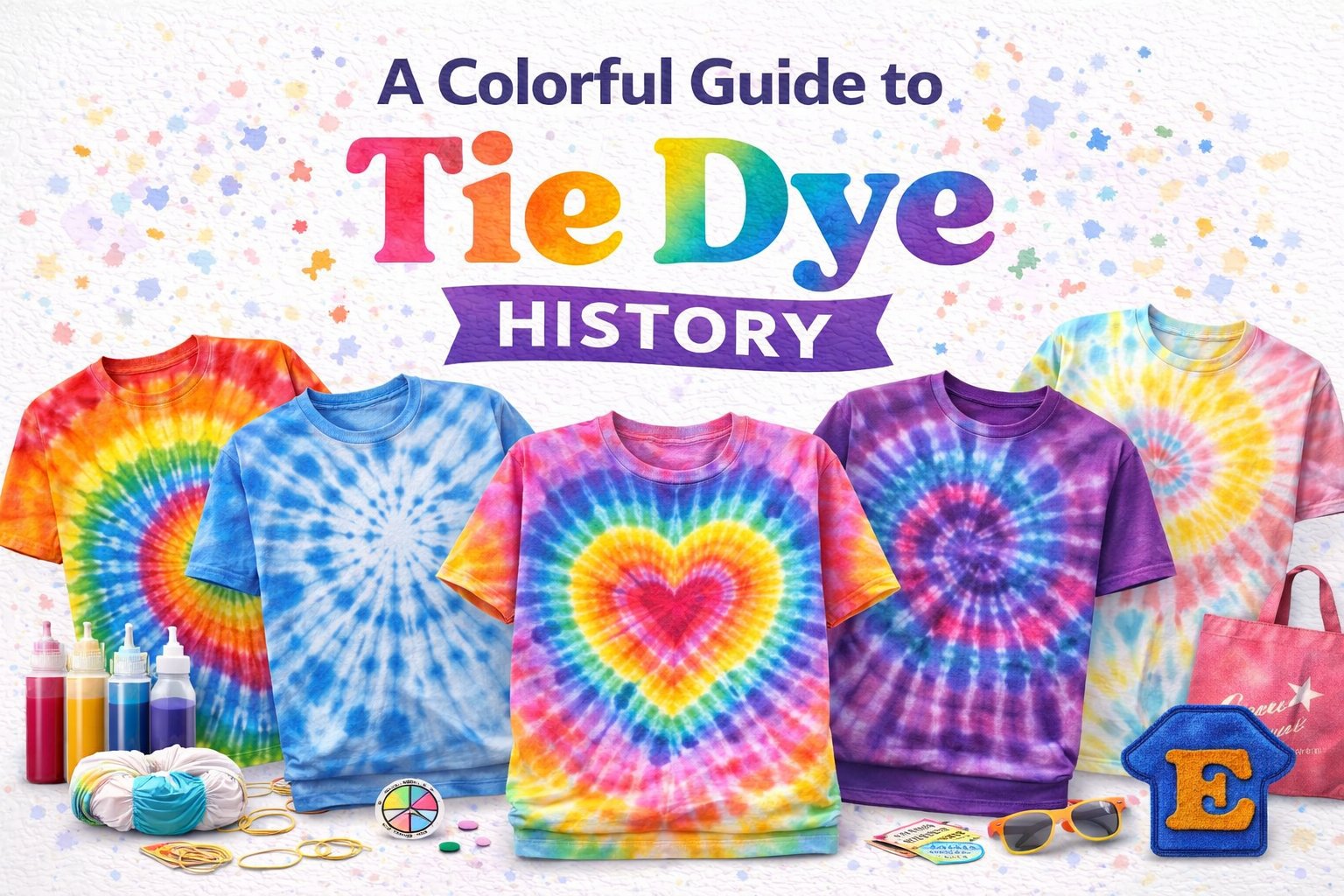
When you think of tie-dye, you probably picture the psychedelic swirls of the 1960s. But the real tie dye history is far older and more global than most people realize. Long before it became a symbol of counter-culture, tie-dye was a sophisticated art form mastered by ancient artisans across Asia.
These weren't just random splashes of color; they were highly refined methods of cultural expression, perfected over centuries. At T-Shirt Envy, we're obsessed with how design history shapes modern apparel, and this is a story that inspires us every day.
The Ancient Roots of Tie Dye
At its core, tie-dye is all about resist dyeing—a clever technique where you fold, twist, or tie fabric to block dye from reaching certain spots. This creates a deliberate, controlled pattern. This simple but brilliant idea has roots stretching back to at least the 6th century.
Early masters in China, Japan, and India used materials from their local environment to create stunningly intricate designs on natural fabrics like silk and cotton. The results were not only beautiful but also deeply tied to their cultural identity.

As you can see, each region developed its own signature style based on available resources and aesthetic traditions.
Ancient Tie Dye Techniques Around the World
To get a better sense of this rich history, it helps to see how these techniques differed from one another.
| Technique | Origin (Region/Period) | Key Characteristic |
|---|---|---|
| Shibori | Japan (8th Century) | Intricate, geometric patterns created by binding, stitching, and folding, often using indigo dye. |
| Bandhani | India (Indus Valley Civilization) | Tiny, dot-like patterns formed by plucking and tying the fabric with thread before dyeing. |
| Zha ran | China (T'ang Dynasty) | Softer, less-defined patterns made by pleating and binding the fabric, using natural dyes from plants. |
This global legacy of turning simple cloth into wearable art is what makes tie-dye’s history so fascinating. The type of material used was also critical, as different fibers absorb dye in unique ways. To see how modern fabrics perform, check out our guide on the best fabric for t-shirts.
Tie Dye as a Symbol of American Resilience

While many connect tie-dye with the Summer of Love, its American story actually begins with something far more practical: pure, scrappy resourcefulness. During the Great Depression, this ancient craft became a powerful symbol of resilience for families facing incredible economic hardship.
It was a simple, effective way to make old things new again. The government even promoted the practice, handing out pamphlets that showed households how to upcycle their worn-out clothes and fabrics. From 1929 to 1939, this thrifty technique helped families save an estimated 15-20% on clothing—a massive relief during a time of crisis. You can find more on this DIY movement on The Adair Group's blog.
This era cemented tie-dye’s identity as a tool for self-sufficiency, a way to add a splash of color to an otherwise bleak time. It was proof that creativity could flourish with even the most basic materials. This spirit of making something beautiful out of necessity has deep roots, and you can see a similar story of resilience in our article on custom Juneteenth print designs. The foundation built during the Depression set the stage for tie-dye’s role in future movements that would also champion independence and self-expression.
How the 1960s Made Tie Dye an Icon
While tie-dye’s American roots are tied to resilience, its legendary status was cemented in the 1960s. This was the decade the craft went from a niche hobby to a full-blown symbol of the counter-culture—a visual anthem for a generation fighting for peace, love, and a radical new way of life.
The DIY, anti-establishment spirit of tie-dye was a perfect match for the hippie movement. It was a loud, colorful rebellion against the gray-flannel conformity of the 1950s. Every unique, unpredictable pattern became a personal statement, a way to stand out from the crowd and reject the status quo. This deep connection to the tie dye history of self-expression is what makes it timeless.
At festivals like Woodstock, tie-dye wasn’t just clothing; it was a uniform. Rock icons like Janis Joplin and Jerry Garcia wore it on stage, forever linking the explosive patterns with creativity and rebellion.
A Symbol of A New Generation
The chaotic beauty of tie-dye was so much more than a trend. It was a statement against mass-produced, cookie-cutter fashion.
Instead, it celebrated something handmade, personal, and completely free-spirited. Anyone could grab a plain white tee and turn it into a one-of-a-kind piece of wearable art. That accessibility was part of its power, a spirit of entrepreneurship and creativity that we aim to empower at T-Shirt Envy.
That same energy is something brands and creators still try to capture today. If you’re looking to channel that spirit into your own apparel, check out our guide on how to design prints for t-shirts.
The Modern Revival of a Timeless Trend

Tie-dye is far more than a retro trend; it’s a mainstream fashion staple that has proven its lasting appeal. After peaking in the 60s, the style returned with the 90s grunge scene and surged again in the 2020s across high fashion and social media.
This isn’t a coincidence. Each revival connects to the core of tie-dye history: the desire for authentic, personal expression. In an era of mass-produced goods, the unique and chaotic patterns of tie-dye feel genuine and one-of-a-kind.
From DIY to High-Fidelity Printing
Capturing this iconic look no longer requires a messy, hands-on process. Modern printing technology now makes it possible to replicate the tie-dye aesthetic with perfect consistency, even on large-scale orders. This shift is a major advantage for businesses that want to use the trend without the unpredictability of traditional dyeing.
At T-Shirt Envy, this is where our Quick, Quality, Printing!™ promise comes in. We equip brands and event organizers with perfectly executed, on-trend apparel delivered with unmatched speed and reliability. Whether for a corporate event or a new clothing line, our technology ensures every shirt has that vibrant, high-energy look.
Bringing the Tie-Dye Trend to Your Brand

So, how does tie-dye history translate into a win for your brand? Its incredible versatility allows you to capture the exact vibe you’re going for, whether you're a corporate team, a growing business, or an event organizer.
The secret is matching the pattern to the purpose. A high-energy music festival or a school fundraiser calls for those classic, bold swirls that radiate excitement. But for a corporate retreat or a modern retail launch, a more refined, two-tone pattern delivers a look that's sophisticated yet creative. You have endless options, and as an industry leader, T-Shirt Envy ensures you never have to sacrifice quality for speed.
How to Use Tie-Dye in Your Next Project
This style is a workhorse, ready to be adapted for nearly any goal. Think about the impression you want to make with your custom apparel.
- Corporate & Team Events: A subtle, tonal tie-dye in your brand’s colors builds team spirit without looking out of place. It’s a smart, modern update to the standard-issue company shirt, perfect for bulk corporate orders.
- Small Business Merch: Drive serious buzz by dropping a limited-edition tie-dye collection. The unique, one-of-a-kind nature of each garment creates genuine scarcity and fuels sales.
- Festivals & Fundraisers: Go all out. Bright, high-contrast, multi-color designs are impossible to ignore and help build a powerful sense of community around your cause or event.
Turning these ideas into reality is faster and easier than ever. You can upload your designs and manage orders on the go with the TSE mobile app, tracking every step from production to delivery. It’s time to put this iconic style to work for you.
Your Tie Dye History Questions Answered
We’ve covered a lot of ground, tracing tie-dye from ancient traditions to today’s trends. To bring it all together, here are clear answers to the most common questions we get about its vibrant history.
What Is the Oldest Form of Tie Dye?
The techniques we recognize as tie-dye today have ancient roots. The earliest known examples are Japan’s Shibori and India’s Bandhani, which date back to at least the 6th century.
These weren't just simple crafts. They were sophisticated art forms that used precise folding, twisting, and tying to create stunningly intricate patterns on fabrics like silk and cotton.
Why Is Tie Dye So Closely Linked to the 1960s?
Tie-dye became the unofficial uniform of the 1960s counter-culture for a reason. Its DIY spirit and bold, free-form patterns perfectly mirrored the movement's ideals of individuality, creativity, and freedom.
It was a powerful, visual rejection of mass-produced conformity. Anyone could do it, and every piece was unique—a perfect symbol for a generation determined to stand out.
Is Tie Dye Still a Popular Trend Today?
Absolutely. Tie-dye has cemented its place as a fashion staple that keeps coming back, stronger each time. You’ll see it everywhere from high-fashion runways to everyday streetwear.
Its appeal lies in that authentic, one-of-a-kind feel. And with modern printing methods, brands can now capture that unique look with perfect consistency across any number of items.
Ready to bring this timeless trend to your next project? T-Shirt Envy delivers vibrant, high-quality custom apparel that makes a statement. Start your custom order today!


