
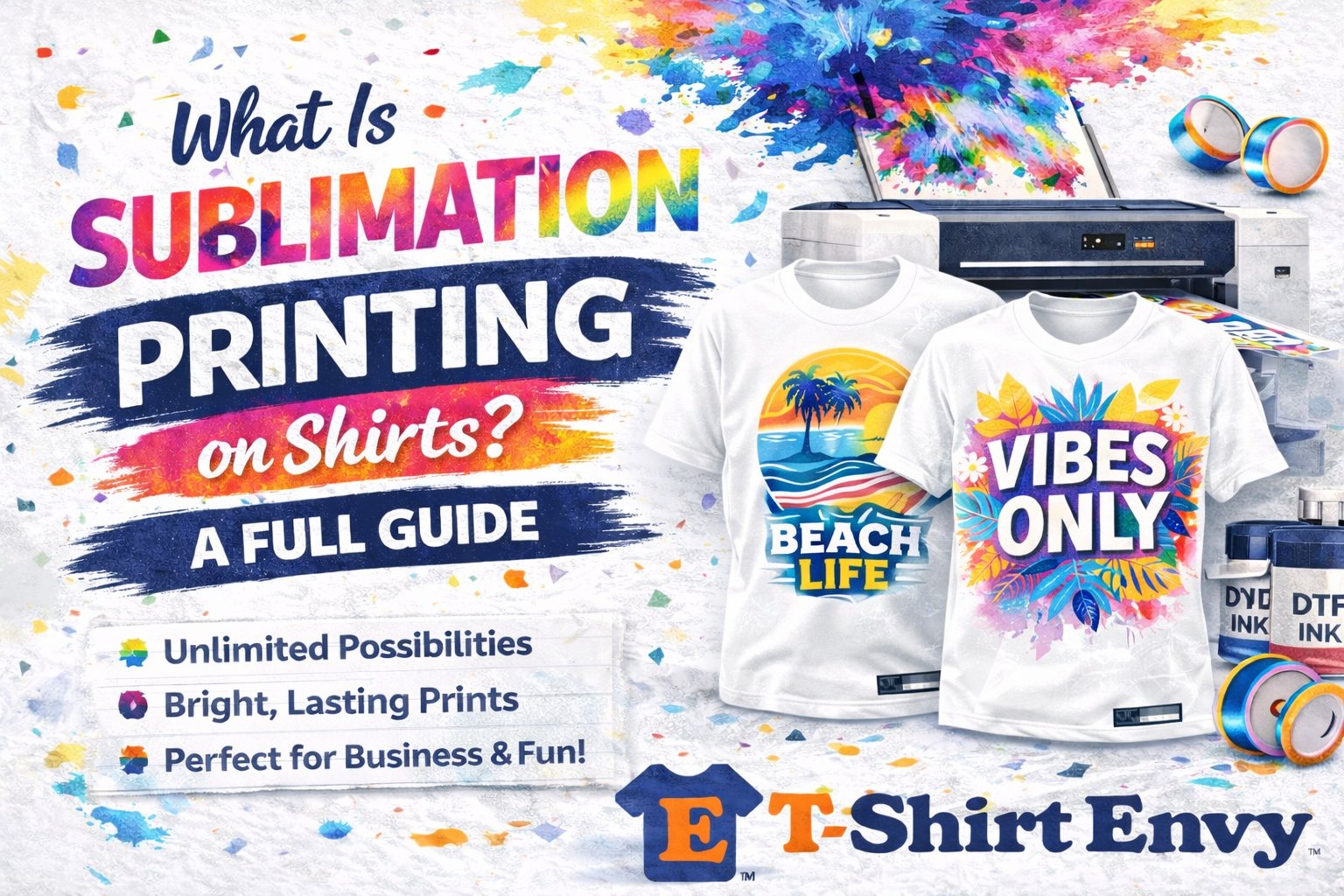
Meta description: Learn what is sublimation printing on shirts, how it works, why polyester matters, and how to order fast custom apparel with durable full-color results.
You’re probably here because you saw a shirt with color that looked almost impossible. Maybe it was a team jersey with sharp names and numbers, or a full-color event tee with a design that felt completely smooth instead of thick and rubbery.
That print style is usually sublimation printing on shirts.
If you’ve been asking what is sublimation printing on shirts, the short answer is simple. It’s a process that uses heat to turn special dye into gas so it bonds with polyester fabric instead of sitting on top of it. For you, that means bright color, no cracking or peeling, and a shirt that still feels like a shirt.
That matters when you’re ordering apparel for a business launch, school event, sports season, family reunion, or merch drop. You want the design to look polished on day one and still look good after repeated wear. You also want to know whether sublimation is the right choice before you place an order.
Your Introduction to Vibrant Sublimation Printing
You’re getting ready for a 5K, company event, or team season, and you need shirts that look bright, feel comfortable, and still look sharp after a lot of wear. You also do not want a heavy print that feels like a sticker on the fabric.
That is where sublimation stands out.
A sublimated shirt has color that becomes part of the garment, so the design looks vivid and the fabric stays smooth to the touch. Customers often notice it the first time they pick up the shirt. The artwork looks like it belongs there, not like it was layered on afterward.
That makes sublimation a strong fit for sports apparel, event shirts, branded merch, and full-color polyester garments. It handles artwork that other methods can struggle with, including gradients, photo-style designs, player names, and detailed logos.
Why customers love the result
The technical process matters because of what you get from it.
Sublimation produces a print that feels soft, wears comfortably, and holds its look over time because the color is bonded into the material rather than sitting on top of it. For an event organizer, that means shirts that still look polished by the end of the day. For a business, it means branded apparel that feels more professional in person. For a team, it means names, numbers, and color transitions can look crisp without adding weight to the shirt.
Here’s what that means for you:
- Your design feels soft because there is no thick print layer on the surface.
- Your colors look bright and clean on the right shirt material.
- Your shirt stays breathable, which matters for uniforms, races, and activewear.
- Your order can move quickly because the process works well for full-color designs without extra setup for each color.
A simple way to understand sublimation is to compare it to dyeing fabric instead of laying ink on top of it. That difference is why customers often ask, “Where’s the print?” when they touch the shirt.
Where sublimation fits best
Sublimation works best for orders where appearance, comfort, and speed all matter.
It is a smart choice for:
- Full-color artwork with fine detail
- Performance shirts for teams, races, camps, or gyms
- Small runs for events or short-term promotions
- Fast-turnaround orders when you need polished results without a long setup process
Sublimation works best when the shirt itself supports the print. Fabric choice shapes the final result just as much as the artwork.
If you have ever seen one custom shirt stay bright while another starts to look tired after washing, the printing method is often the reason. The shirt material matters too. That combination is a big part of getting a result you will be happy to hand out, wear, or sell.
How Sublimation Binds Ink and Fabric as One
Sublimation sounds technical, but the core idea is easy to follow.
Think about sugar in hot water. Once it dissolves, you can’t peel it back out. It becomes part of the liquid. Sublimation works in a similar way. Instead of laying ink on the shirt’s surface, the process drives dye into polyester fibers with heat.
What actually happens during printing
The design starts on a computer, then prints onto special transfer paper using dye-sublimation ink. That paper is placed onto the shirt, and a heat press applies heat and pressure.
Under that heat, the ink changes phase. It goes from solid to gas and enters the polyester structure. ShirtSpace explains that dye-sublimation inks convert from solid to gas under heat, typically 375–400°F (190–205°C) and medium pressure of around 40–60 psi for 45–70 seconds, allowing the dye to penetrate and bond with polyester fibers.
That “gas” part is where many people get confused. It doesn’t mean smoke or residue. It means the dye is activated so it can move into the material itself.
Why that matters to you
Because the image becomes part of the fabric, you get benefits that are easy to notice right away:
- No cracking
- No peeling
- No heavy print layer
- No stiff chest panel feeling
That’s why sublimated shirts are popular for movement-heavy use. Runners, team players, event crews, and staff members often prefer shirts that stay light and flexible.
The shirt still feels like fabric
A lot of custom printing methods create a visible and touchable layer on top of the garment. That can be the right choice in many situations, but sublimation feels different.
Practical rule: If you want the design to disappear into the garment instead of sitting on top of it, sublimation is the method people usually mean.
This quick visual helps make the process easier to picture:
Why polyester is part of the science
Sublimation doesn’t work this way on every shirt. The dye needs polyester or a polymer coating so it has something to bond to. That’s why you’ll hear print shops ask about fabric before they talk about artwork.
If your goal is a soft, breathable, full-color shirt for an event or team, the process can be an excellent match. If your shirt is cotton or a dark heavyweight fashion blank, another method may be smarter.
The Essential Materials for a Perfect Sublimation Print
A great sublimation shirt starts before the press ever closes. If you are ordering shirts for a company event, race, school group, or staff team, the materials chosen at the print shop shape how bright the design looks, how soft the shirt feels, and whether the final result matches what you pictured.
The easiest way to understand it is to see sublimation as a team effort. The printer creates the image, the ink carries the color, the paper holds that image until transfer, the heat press drives the process, and the shirt has to be made from the right fibers to accept the dye cleanly.
The equipment behind the print
A standard sublimation setup includes:
- A sublimation printer that prints the design with sublimation dye
- Sublimation inks made to transfer under heat
- Transfer paper that releases the image onto the garment
- A heat press that applies controlled heat, pressure, and timing
The heat press does more than just make the shirt hot. It has to hold a steady combination of temperature, time, and pressure so the transfer comes out clean and even. If one part of that setup is off, colors can look weak, edges can lose sharpness, or one shirt can look slightly different from the next.
That matters when you are ordering for a group. You want the first shirt and the fiftieth shirt to match.
Why the shirt matters most
The blank shirt is the part customers tend to underestimate, but it has the biggest effect on the final look.
Sublimation works best on polyester-rich garments. A full polyester shirt gives the dye the best surface to bond with, so colors look brighter and more defined. As the polyester content drops, the print usually looks softer and more muted because less of the fabric can hold the dye.
A blended shirt can still be a good choice if you want a faded, vintage-style finish. If you want bright event shirts, sharp logos, or colorful team graphics, a higher-polyester blank is usually the better pick.
Cotton is where many orders go off track. A white cotton shirt may look like it should work, but sublimation dye does not bond to cotton the same way. For you, that means the fabric choice is not a small technical detail. It decides whether sublimation is the right method at all.
What different fabrics look like
Here is the practical version customers care about:
- 100% polyester gives the clearest, brightest result
- High-poly blends can print well, with a slightly softer look
- Lower-poly blends often create a faded or heathered effect
- Cotton is better suited to a different print method
If you are still comparing blanks, fabric feel matters too. A race shirt, a staff uniform, and a retail-style tee all wear differently. This guide to the best fabric for t-shirts can help you sort out comfort, weight, and print compatibility before you place an order.
The most common sublimation mistake is picking a shirt for its color or price first, then finding out the fabric is wrong for the print.
Choosing the right blank for your goal
For jerseys, event shirts, promo apparel, and activewear, sublimation often lines up well with the kind of garment people already want to wear. Polyester performs well, feels light, and takes color beautifully.
If your goal is a soft cotton fashion tee, the project may still work well, but the best path is often a different decoration method. At T-Shirt Envy, that is the point where good guidance saves time. The right shirt and the right print method help you get a result that looks right on delivery day, not a surprise when the box shows up.
Key Benefits and Limitations of Sublimation
Sublimation has been around for decades, but it became a major force in apparel because it solved a real problem. It made full-color printing on polyester garments durable, comfortable, and practical at scale.
A major milestone came in 1957, when the sublimation process was patented, and it became a staple for polyester garments in the 1970s as sportswear grew. Today, the global sublimation market is valued at $3-5 billion, with apparel such as jerseys and activewear making up over 40% of that total, according to Coastal Business.
Where sublimation shines
Color intensity
Sublimation is strong for bright, detailed, full-color artwork, especially on light polyester.Smooth feel
Since the dye becomes part of the garment, the print doesn’t add a thick surface layer.Long-term wear
The design doesn’t crack or peel because it isn’t sitting on top of the fabric.Performance use
Jerseys, activewear, and event shirts benefit from a lightweight finish that doesn’t fight the fabric.
Where it has limits
Fabric restrictions
Sublimation needs polyester or a polymer-coated surface. That rules out many cotton-first projects.Light garment preference
Sublimation works best on light-colored shirts because the dye is part of the fabric rather than a layer of opaque ink.Not ideal for every order type
It’s excellent in the right lane, but not every shirt order belongs in that lane.
The honest way to decide
If your project is a white or light polyester shirt and the artwork is colorful or complex, sublimation is often a strong option.
If your project needs dark cotton tees, heavyweight streetwear blanks, or a classic plastisol logo look, another method will usually make more sense.
That balance matters. The right print method isn’t the one with the flashiest name. It’s the one that matches the shirt, artwork, and deadline.
How Sublimation Compares to Other Printing Methods

You are ordering shirts for a weekend event. The design is full color, the deadline is tight, and you want the finished shirts to look sharp without feeling heavy or plastic. That is usually the moment when print method starts to matter.
A good comparison starts with the result you want to wear. Some methods sit on top of the shirt like a printed layer. Sublimation dyes the fabric itself, which changes both the feel and the ideal use case.
A simple side by side comparison
| Method | Works best on | Feel on shirt | Color style | Best order type | Typical use |
|---|---|---|---|---|---|
| Sublimation | Light polyester | No added feel | Bright, detailed color on poly | Short-run polyester orders with fast turnaround | Jerseys, performance wear, event shirts |
| DTG | Cotton and some blends | Soft print feel | Strong for detailed artwork | Small custom runs | Fashion tees, artist merch, one-off prints |
| DTF | Cotton, polyester, blends | Noticeable transfer feel | Bold color on many fabrics | Flexible short runs across mixed garments | Logos, uniforms, varied apparel orders |
| Screen printing | Many garments, especially larger batches | Ink layer on fabric | Strong spot-color look | Larger volume orders | School shirts, staff uniforms, simple bulk designs |
Where sublimation usually wins
Sublimation is often the smart choice when the shirt is polyester, the artwork has lots of color, and the order needs to move fast.
For you, that shows up in practical ways. The print stays light on the shirt during a 5K, tournament, or outdoor promo event. Detailed gradients and photo-style graphics reproduce cleanly. The design also keeps its look over time because there is no top layer to crack or peel.
That combination makes sublimation especially useful for:
- team jerseys
- fun run shirts
- company event apparel
- short-run promotional shirts
- small merch drops on performance blanks
If your order checks those boxes, sublimation usually feels less like a compromise and more like the right tool for the job.
Where another method fits better
Every print method has a lane.
Cotton tees usually point toward DTG or DTF. Dark garments also push the job away from sublimation, because sublimation does not print an opaque white base. Large bulk orders with simple artwork often make more sense with screen printing, especially when lowering cost per shirt matters more than full-color complexity.
Mixed-fabric orders can be tricky too. If half your group wants cotton and the other half wants polyester, a transfer-based method may give you more flexibility. For a closer look at how those options differ, T-Shirt Envy breaks it down in this guide to direct-to-film vs direct-to-garment printing.
Quick shortcut: Choose sublimation for light polyester shirts with colorful artwork and a priority on comfort, speed, and long-term durability.
Why print shops ask about fabric, quantity, and deadline
Those questions shape the recommendation.
A shop is matching the method to the outcome you need. Shirt fabric tells us what can bond well. Quantity affects which process makes sense financially. Deadline helps determine what can be produced cleanly and on time without forcing the wrong method onto the job.
At T-Shirt Envy, that matters most for customers ordering around a real deadline. A school event, staff launch, tournament, or branded giveaway usually has a fixed date. The right print method helps you get shirts that arrive on time and still feel right when people put them on.
Artwork Tips and Care for Lasting Vibrancy
A good sublimation shirt starts long before the heat press closes. File quality and design choices affect the final look more than most first-time buyers expect.
How to prepare artwork that prints well
Use artwork that is clean, high resolution, and sized for the actual print area. Fine details, soft gradients, and photo-style images usually translate well with sublimation on the right garment.
A few practical habits help:
- Use sharp files so edges don’t print blurry.
- Check your final size before uploading.
- Expect mirrored transfer output because the print is reversed on paper before pressing.
- Design for the garment color since the shirt itself affects the final look.
If you’re placing an order while traveling, managing a school event, or handling a team reorder, the TSE mobile app can make it easier to upload artwork, organize order details, and keep things moving without switching to a desktop.
Simple care habits that help
Sublimation is known for durability, but care still matters.
Wash your shirt like a quality garment, not an afterthought. Cleaner washing habits help the fabric keep doing its job.
A few good habits:
- Wash inside out to reduce abrasion from other items
- Use cold water for everyday laundering
- Choose mild detergent when possible
- Tumble dry low or air dry if you prefer a gentler routine
- Avoid harsh heat directly on the printed area during care or storage
What customers notice over time
The biggest long-term advantage is consistency. A sublimated design doesn’t develop that peeling-edge look people often associate with lower-quality custom shirts.
The shirt may age with normal wear, but the print remains part of the fabric rather than separating from it.
Start Your Custom Sublimation Order Today
If your project calls for light polyester shirts, vivid full-color artwork, and a finish that stays soft to the touch, sublimation is a strong choice.
It works especially well for athletic wear, event apparel, branded performance shirts, and small runs where setup speed matters. That makes it useful for businesses with launch deadlines, schools with spirit events, and teams that need uniforms without a long production runway.
What to have ready before ordering
A smoother order usually starts with a few basics:
- Your design file
- The shirt type or preferred blank
- Your size breakdown
- Your quantity
- Your deadline
If you’re not sure whether sublimation fits your order, the first question to answer is simple. Is the shirt polyester and light-colored? If yes, you’re already in the right territory.
How the ordering process feels easier
For many customers, the hard part isn’t design. It’s coordination.
That’s where mobile ordering helps. The TSE mobile app can simplify on-the-go ordering, especially if you need to upload art, manage a business or group order, or track production status while your event planning is already moving fast.
If you already know sublimation is the method you want, reviewing a dedicated full-color t-shirt sublimation option can help you line up the garment and artwork requirements before checkout.
What makes a smart first step
Don’t start by guessing the print method. Start by matching the shirt, artwork, and deadline.
That approach usually prevents the two biggest order problems. Picking the wrong garment and expecting the wrong finish.
Frequently Asked Questions About Sublimation
You might be planning shirts for a company event, a school group, or a weekend race and feel clear on the basics, then one practical question stops the order. Will this work on the shirts I want? Will it last? Can I use my own garments?
Those are the questions that matter, because the right print method should make ordering easier, not more confusing.

Can you sublimate on dark or black shirts
Standard sublimation works best on white or light-colored polyester.
Here’s why. Sublimation dye turns into gas under heat and bonds inside the fibers. It does not sit on top like a thick ink layer, so there is no white base blocking the shirt color underneath. On a black shirt, those colors get lost. For you, that means a bright full-color design needs a light garment to look the way you expect.
Why does a blend shirt look faded
Only the polyester part of the fabric holds the dye.
A blended shirt can still look good, but the result is usually softer and less saturated than the same design on 100% polyester. Many customers choose that on purpose for a worn-in, vintage effect. If you want sharp, bold event shirts or branded performance apparel, a higher-poly shirt is usually the safer pick.
Can I bring my own shirt for sublimation
Often, yes, if the garment fits the process.
The first thing to check is the tag. Light color and high polyester content are the green lights. Dark fabric, cotton-heavy blends, and some specialty textures can change the result or rule sublimation out completely. If you are ordering for a group, confirming the garment before production helps avoid delays and surprise color shifts.
Does sublimation crack or peel
No. The design becomes part of the fabric instead of forming a separate layer on top.
That matters in real life. Team shirts get stretched. Staff shirts get washed often. Event shirts get worn, packed, and worn again. With sublimation, you do not get the cracking or peeling that people worry about with some other methods.
Is sublimation only for shirts
No. The same process can work on other polyester or polymer-coated products.
Shirts are the most common starting point because they are practical, visible, and easy to order in quantities. The bigger point is compatibility. If the surface is made for sublimation, the process can usually transfer there too.
How long does a sublimated shirt last
A properly sublimated print holds up very well with normal wear and washing.
The main reason is simple. Since the color lives inside the polyester fibers, it does not flake off over time. If the shirt itself stays in good shape, the print usually stays bright right along with it. For customers ordering uniforms, promo apparel, or recurring event shirts, that durability is one of the biggest advantages.
What is the most common mistake people make before ordering
Picking artwork or garments that do not match the process.
A customer may want a black cotton tee with a bright photo print, which sounds great until the print method and the shirt are working against each other. Sublimation gives its best results on light polyester with artwork that benefits from full color and fine detail. If you start there, the order tends to move faster and the finished shirt matches expectations much more closely.
Can sublimation be a good choice when the deadline is tight
Yes, especially when the garment already fits sublimation requirements.
For an end customer, that usually means less setup friction and a faster path from approved artwork to finished shirts. If you are ordering for an event or a business deadline, that speed can be the difference between getting exactly what you want and settling for a backup plan.
Ready to turn your artwork into a soft-feel, full-color polyester shirt? Visit T-Shirt Envy to start your custom order today, or download the TSE mobile app to upload your design, manage quantities, and keep your order moving from anywhere. Experience Quick, Quality, Printing!™ with a print method that’s built for bright color, clean detail, and fast turnaround.


