
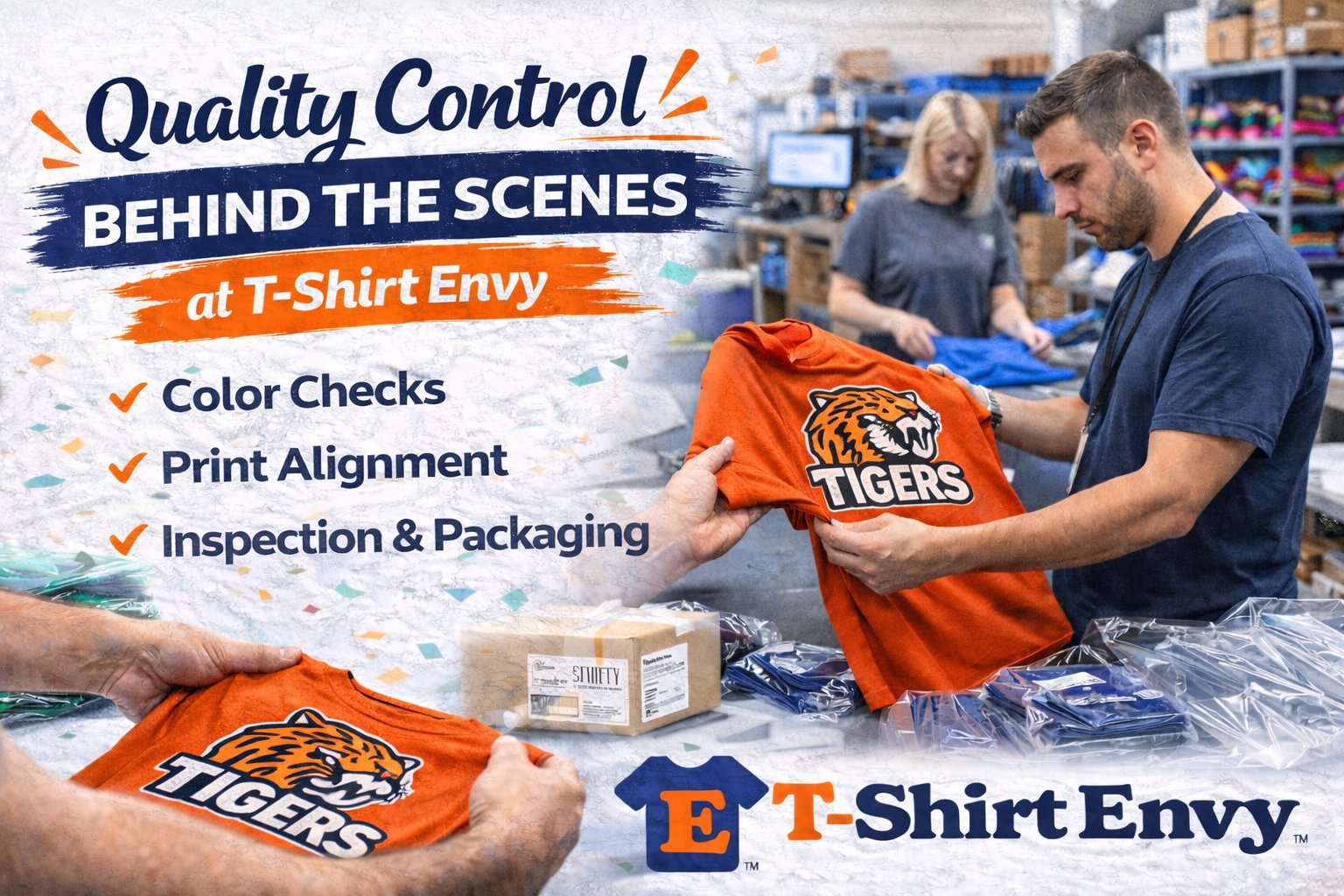
Ordering rivalry shirts usually starts with the same three questions. Will the colors look right, will the print hold up after the first wash, and will the order land on time for the game, fundraiser, or tailgate. That’s exactly where Quality Control Behind the Scenes at T-Shirt Envy matters most.
A fan shirt isn’t just apparel. It’s the thing people wear in photos, in parking lots, in packed stadium sections, and on the Monday after a big win. When production moves fast, every checkpoint has to earn its place. The goal isn’t more process for the sake of process. The goal is catching problems before they become somebody else’s disappointment.
Meta description: Quality Control Behind the Scenes at T-Shirt Envy reveals how design checks, print testing, and final inspections protect fast custom orders.
Why Gameday Gear Demands Uncompromising Quality
A rivalry shirt has a deadline built into it. If it shows up late, the moment is gone. If the colors are off, everybody notices. If the print cracks after one wash, the shirt becomes a one-day prop instead of gear people keep wearing.

That’s why production has to think like the customer. A student group ordering for a watch party cares about bulk consistency. A last-minute fan who needs one shirt by tonight cares about speed without a sloppy print. A booster club wants both.
The hard part of gameday apparel isn’t making a shirt. It’s making the same promise across rush orders, group orders, and repeat washes.
Behind the scenes, the standard is simple. Every quality step has to protect one of three outcomes:
Arrival confidence so orders are ready when the event happens
Visual accuracy so school colors and artwork read the way customers approved them
Wearability so the shirt still looks good after real use
That’s what turns custom apparel from a gamble into something fans can count on.
The Blueprint for a Perfect Rivalry Tee
Quality starts before a press heats up or a platen moves. Most preventable issues show up at the artwork and garment stage, not at the end.
File checks that save a print run
When a design comes in, the first job is to pressure-test the file. Low-resolution artwork, flattened screenshots, and odd color profiles are the usual troublemakers. They don’t always look bad on a phone screen, but they can fall apart on fabric.
The first pass focuses on practical questions:
Is the art clean enough to print well on the selected method?
Will the colors translate correctly once they move from screen to garment?
Does the design size fit the garment without looking cramped or undersized?
Customers who order through the TSE mobile app can upload artwork on the go, which makes fast ordering easier, but speed only helps if the file gets reviewed properly. Good prep prevents rushed corrections later.
Picking the right blank
Not every shirt prints the same way. That’s not a marketing line. It’s a production fact.
A soft cotton tee can be the right call for a detailed front graphic. A poly-blend may make more sense for an athletic or performance-focused shirt. Embroidery behaves differently from DTG. Sublimation needs the right fabric conditions to show its strengths.
Practical rule: The print method and the garment have to agree with each other. When they don’t, quality drops before production even starts.
The best rivalry tee usually comes from matching three things early. The design style, the way the shirt will be worn, and how fast the order needs to move.
A Deep Dive into Print Technology and Quality
Different print methods fail in different ways. That’s why a strong production floor doesn’t treat every order the same.

DTG for complex artwork
Direct to Garment works well when the design has fine detail, gradients, or photo-style elements. For rivalry gear, that can mean a mascot illustration, a layered graphic, or a one-off shirt with custom names.
The quality challenge with DTG is control during printing, not just at the end. According to T-Shirt Envy’s about page, DTG printers use advanced color management where in-process QC checks can detect misalignment or curing failures, averting 10-15% of rejection rates common in the industry from issues like ink feathering on cotton blends, ensuring a 98% first-pass yield (about T-Shirt Envy).
That matters because DTG problems often reveal themselves mid-process. If the operator catches alignment drift or curing issues early, the garment doesn’t move further down the line pretending to be good.
For buyers comparing methods, this breakdown of Direct-to-Film vs Direct-to-Garment helps clarify when each option makes more sense.
DTF for flexibility across garments
Direct to Film is useful when the order includes a wider mix of items or fabrics. It gives production flexibility, especially when customers want the same design across different garment types.
What works with DTF is disciplined transfer handling and placement. What doesn’t work is treating it like a shortcut. A fast transfer still needs a clean application, proper adhesion, and a final look that matches the approved design.
Screen printing for group orders
Screen printing still makes sense for fan clubs, student sections, and event teams that need a bold design repeated across many shirts. It’s strong for simpler artwork and larger quantities.
The trade-off is setup. If the design has lots of photographic detail or frequent personalization, screen printing becomes less practical. But for clean, high-contrast rivalry graphics, it remains a reliable production choice when the art is built for it.
Embroidery for a premium finish
Embroidery fits polos, hats, jackets, and sideline gear better than a large chest graphic tee. The quality check here isn’t only thread color. It’s stitch density, registration, and how the garment supports the design without puckering.
A good embroidered piece feels intentional. A rushed one looks stiff or distorted fast.
| Method | Best fit | Key quality check |
|---|---|---|
| DTG | Detailed, full-color art | Color management, alignment, curing |
| DTF | Mixed garment types | Transfer placement, adhesion, finish |
| Screen printing | Bulk, bold graphics | Ink consistency, registration, curing |
| Embroidery | Hats, polos, premium apparel | Stitch quality, backing, garment stability |
The Wash Test Putting Our Prints Through the Wringer
A shirt can look perfect on press and still disappoint after the first Saturday tailgate wash. That gap between fresh print and real use is where weak production shows up fast.

That is why we keep a washer and dryer in-house.
We pull random garments from production and run them through a real wash-and-dry cycle. No one outside the shop sees the unglamorous part of quality control, but this is one of the clearest proof points we can offer. Plenty of shops say their prints hold up. We test ours the same way customers will use them.
The goal is simple. Catch the failures people care about before they reach a customer. Fading after repeated washes. Ink cracking across the chest. Peeling at the edges. Loss of hand feel after heat and agitation. If a print only looks good on day one, it did not pass.
Why the wash test matters
Every print method has a failure point if the process slips. DTG can lose impact if pretreatment or curing is off. DTF can develop edge lift if the transfer was not applied cleanly. Screen printing can crack or wash down if the ink film and cure were not dialed in for that garment.
The wash test gives us a practical check on those variables.
It also keeps rush work honest. Tight deadlines put pressure on every production floor, but the shirt still has to survive normal laundry. Quick, Quality, Printing!™ means the order moves fast and holds up after wear, not just that it left the shop on time.
Without proper testing, some prints can show noticeable fading or breakdown after repeated washes. That is the reason for the in-house laundry setup. It closes the gap between "printed" and "proven" with an actual durability check, not a promise.
Customers still play a role once the order leaves our hands. Good care extends the life of any print, which is why we also share clear washing instructions for screen printed t-shirts for teams, fan groups, and event orders that will see heavy rotation.
Shop-floor takeaway: If a shop never tests garments after laundry, they are assuming the print will hold up.
Final Checks for a Flawless Fan Experience
A strong print on a flawed garment still fails inspection. Final quality control has to look at the whole piece.
What gets checked before packing
Before an order is packed, the garment gets reviewed by human eyes. The team looks for crooked seams, loose threads, visible garment flaws, and print placement that doesn’t match the approved proof.
That final check also protects the customer experience in a less obvious way. A shirt can be technically printable and still feel wrong if the design sits too high, too low, or slightly off-center. Customers notice balance immediately, even if they don’t describe it in production terms.
Why human review still matters
Machines help with consistency. People catch what feels off.
That’s especially important on rush work, mixed-size orders, and customer-supplied items. The closer the deadline, the more valuable a calm final inspection becomes. It’s the last chance to stop a bad piece from making it into the box.
Approved artwork is the target. Final inspection confirms the garment in hand still matches it.
Smart Ordering for Your Gameday Group
The best order plan depends on how many people you’re outfitting, how detailed the design is, and how tight the deadline feels.
A student section ordering matching shirts for a full group usually benefits from choosing a method built for repetition. A creator making a single rivalry shirt with detailed art needs flexibility more than volume economics. A business sponsoring a tailgate may need both branded consistency and fast reorder capability.
How to make the order easier
A few decisions make production smoother from day one:
Lock the artwork early if multiple people want input
Choose the method based on use case, not just on what sounds familiar
Collect sizes in one pass so the order doesn’t stall in revisions
Build in care expectations for the group before distribution
The TSE mobile app helps organizers handle the practical side. It’s useful for uploading designs, managing group details, and tracking production status without chasing updates through scattered messages.
If timing is the main pressure point, review the options for rush order custom shirts before you finalize the method. Fast service works best when the artwork, garment choice, and quantity are aligned early.
One smart move beats five rushed corrections every time.
Frequently Asked Questions About Custom Rivalry Shirts
Can I use any team logo I want
Use caution with official logos, mascots, and licensed artwork. Schools, leagues, and brands often protect those marks, and a printer should flag that before production starts. Original rivalry graphics, custom phrases, and fan-made concepts usually give you more freedom and fewer approval problems.
How fast can a custom shirt really be ready
Turn time depends on three things. Clean artwork, blank shirt availability, and the print method. A production-ready file can move quickly. A blurry screenshot, a missing font, or a design that needs to be rebuilt adds time before the shirt ever reaches a press.
What’s the best print method for one shirt versus a group order
One shirt with detailed artwork usually fits a digital print method better. A larger group order with bold, simple art often makes more sense for screen printing because the setup pays off across the run. The right choice starts with the design and the quantity together, not with a default preference.
How should rivalry shirts be washed
Follow the care instructions included with the order. Our goal is for every print method to hold up for the life of the shirt when it is washed properly, especially with cold water, inside-out washing, and lower dryer heat.
That standard is not guesswork. We run in-house wash testing with our own washer and dryer because a print can look great off press and still fail after repeated wear. Rivalry shirts get worn hard, washed often, and packed for road games. The care routine matters because it protects the work already built into the garment.
What if I’m ordering for a fundraiser or school group
Keep the approval chain tight. One point person should approve art, sizes, and final quantities. That prevents late swaps that slow production and create mixed results across the order.
For school groups, booster clubs, and fundraisers, the cleanest orders usually come from simple rules set early. Finalize the design before collecting money. Collect sizes once. Confirm who has authority to approve changes. That saves time and reduces preventable errors once the order is on the floor.
Start your custom order with T-Shirt Envy if you need fast apparel production backed by real print checks, durability testing, and clear ordering tools. Download the TSE mobile app, upload your design, and get your gameday group moving with confidence.


