
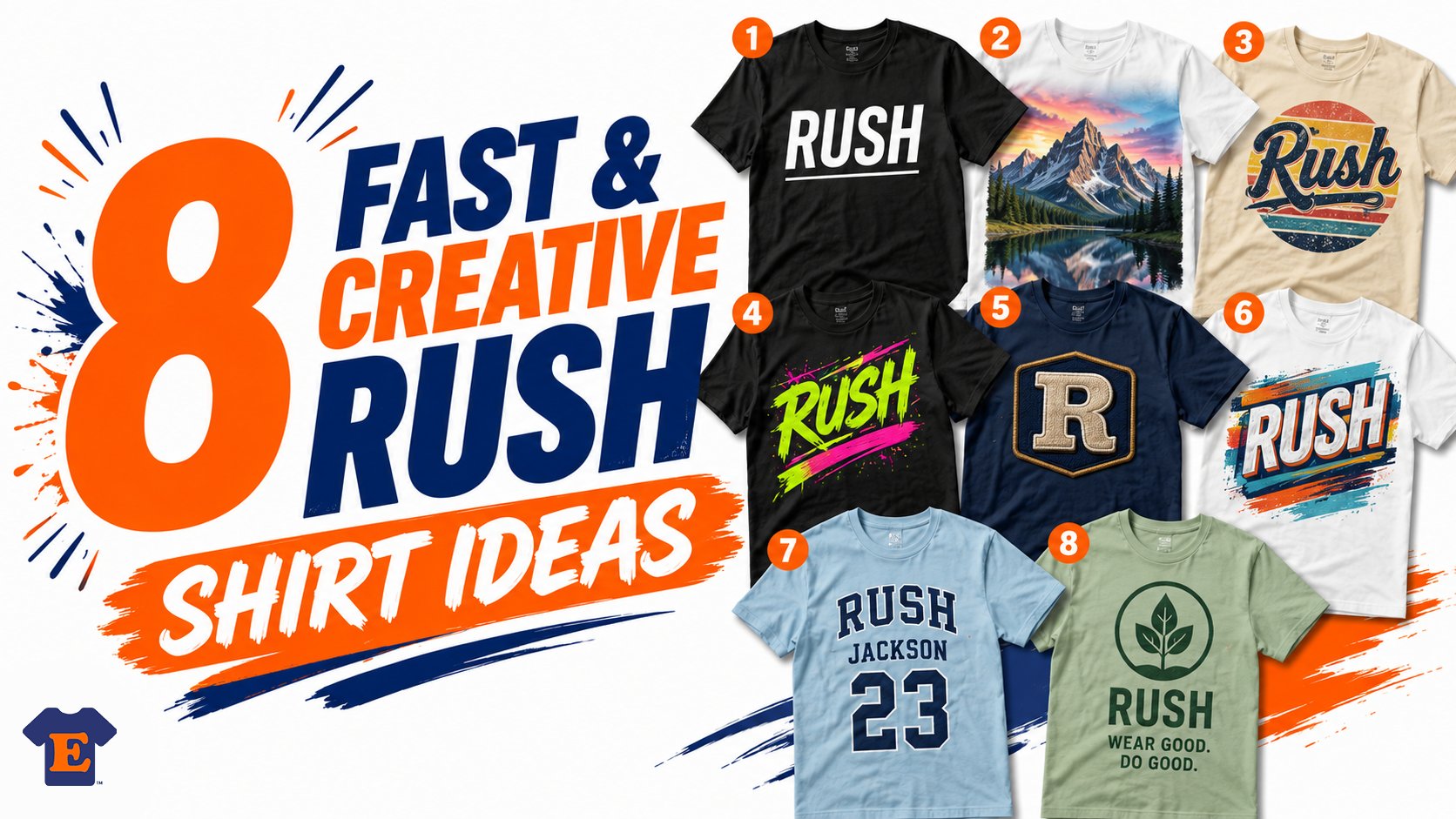
Last-Minute Shirts? No Problem. Here's Your Inspiration.
That oh no moment is real. Your event is close, the headcount just changed, and now you need custom apparel fast. The good news is that strong rush shirt ideas don't require weeks of planning if you pick the right design direction and match it to the right print method.
At T-Shirt Envy, speed only matters if the shirts still look sharp when they land in your hands. That's where smart decision-making comes in. Some ideas are better for same-day DTG. Some belong in DTF. Others make more sense with screen printing or embroidery, especially if you want a premium finish or you're ordering in volume.
Rush shirt ideas also matter more than ever because the T-shirt itself has a long history as both a practical garment and a message piece. By 1942, over 15 million T-shirts had been supplied to U.S. military personnel, and by 1948 printed slogan tees had already entered campaign culture through Thomas E. Dewey's “Dew-It with Dewey” shirts, as noted in RushOrderTees' history of T-shirts. That same mix of utility and self-expression is exactly why rush apparel still works.
If you're ordering on a deadline, get to the point fast. Pick a concept, choose the print method that fits it, and move. You can even upload art, review details, and keep your order moving through the TSE mobile app when you're away from your desk. That's the kind of workflow that keeps a rush order from turning into a scramble.
1. Minimalist Monochrome with Bold Typography
A single word in the right font can beat an overbuilt design every time.
Minimalist monochrome works because it prints clean, reads instantly, and avoids the clutter that often kills rushed designs. If you need shirts for staff, corporate teams, promoters, volunteers, or a student group, this is one of the safest and fastest directions to execute well. Think charcoal shirt, white ink, oversized back print, and a small chest mark up front.

This style is popular for a reason. It feels modern, and it hides production stress. If your final list of names, sponsors, or event details is still shifting, bold type gives you room to simplify instead of forcing artwork that isn't ready.
Best print method for this look
For small runs and rush timelines, DTG is usually the easiest answer on cotton tees. You get a soft print, sharp edges, and no need to build a complicated separation file. For larger runs with a simple one-color layout, screen printing becomes the stronger play because the print is consistent and the unit cost gets friendlier as quantities rise.
The trade-off is simple:
- DTG fits short runs: Great when the order count is still moving or you need no-minimum flexibility.
- Screen print fits stable bulk orders: Better when the design is locked and you want repeatability across a larger batch.
- Embroidery usually isn't the move here: It can work for a small chest logo, but it doesn't deliver the oversized bold-letter look typically desired for typographic shirts.
What works and what doesn't
Big type works. Tiny slogans don't. Neutral garment colors also help because they keep the shirt wearable after the event.
Practical rule: If someone can't read the main message from several steps away, the design isn't bold enough.
Real-world example. A conference staff shirt with STAFF in clean sans serif lettering on the back, plus a small event logo on the chest, will usually outperform a shirt packed with gradients, sponsor logos, and decorative shapes. The cleaner shirt gets worn again. That's valuable if you're building repeat apparel for a team.
If you want a dependable, reorder-friendly option, this is one of the strongest rush shirt ideas on the board.
2. Full-Color Photorealistic and Gradient Blends
Some shirts need detail, not restraint.
If your concept includes a skyline photo, dramatic lighting, layered color, chrome effects, smoke, flames, a collage, or a full poster-style composition, skip traditional simplicity and lean into full color. Modern rush shirt ideas get exciting at this stage. You can create limited-run merchandise, artist apparel, memorial tees, event promos, and standout chapter designs that feel custom instead of generic.
Around 2020 to 2022, vintage 80s-inspired themes such as fighter jets, astronauts, UFOs, and Top Gun-style looks dominated many fraternity rush designs, with 40% of top rush designs incorporating retro elements in Jamison Pointe's analysis of over 100 chapters, according to MetroGreek's rundown of top fraternity rush shirt themes. That tells you something important. Big themed visuals win attention when the artwork is memorable.
Why DTG and DTF make this possible
This is DTG and DTF territory.
DTG is excellent on light cotton shirts when you want a soft hand and photo-quality output. DTF is often the better option for dark garments, polyester blends, or designs with heavier color coverage. If the shirt color is black, navy, or another dark tone, DTF usually gives you stronger pop and cleaner opacity.
If you're deciding between the two, T-Shirt Envy breaks down the trade-offs clearly in this guide to DTF vs DTG printing methods.
File setup that saves the order
Photorealistic printing exposes weak artwork fast. A blurry screenshot won't suddenly look premium because it's printed on a shirt.
Use these standards:
- Start with a clean image: High-resolution art gives the printer room to preserve detail.
- Keep the focal point centered: Busy full-color designs read better when one visual dominates.
- Match the shirt color to the art: A dark garment can enhance a space scene, a metallic car concept, or a night-event graphic.
Complex art needs the right process. Don't force a photo-heavy design into a print method that was chosen only because it feels familiar.
A good example is a launch-party shirt featuring a custom sports car render with smoke and sunset gradients. On screen print, the art may need major simplification. On DTG or DTF, the design can stay intact and still move fast.
3. Retro and Vintage-Inspired Designs
A rush order can still look seasoned.
Retro and vintage-inspired shirts work because they hide urgency well. A cracked graphic, washed palette, and throwback type treatment can make a brand-new print feel established on day one. That makes this style a smart choice for campus events, reunion apparel, fundraiser tees, music merch, and rush campaigns that need character without visual clutter.

The print method matters more here than people expect. Screen printing usually gives the strongest result for vintage art when the order size is large enough to justify setup, especially for simple spot-color designs with faded inks and intentional wear built into the file. DTG is often the faster option for smaller runs or artwork with layered textures, because it can reproduce soft fades and distressed detail without separating each color for screens.
The trade-off is straightforward. Screen print delivers a classic, durable finish and consistent color across a batch. DTG handles short deadlines and detailed texture effects with less prep. If the artwork includes heavy distressing, subtle grain, or multiple aged tones, DTG can preserve that nuance better on a tight timeline. If the design is bold, limited-color, and headed onto dozens of shirts, screen print usually looks more authentic.
A vintage shirt should feel referenced, not random.
Use design choices that support the era you're pointing to:
- Muted colors: Rust, cream, sage, faded navy, and sun-washed gold usually outperform bright primaries.
- Controlled distressing: Break up fills, soften edges, and age the texture, but keep names, dates, and key words readable.
- Period-specific graphics: Old athletic lettering, retro mascots, souvenir-style illustrations, faux badge layouts, and tour-poster composition all hold up well.
Overdo the damage effect and the shirt starts looking low-budget. Keep one clear focal point and let the aging treatment support it.
A good rush example is a fraternity shirt built around a faux aviation insignia with sunset stripes and lightly cracked type. A senior class design styled like a 1970s camp tee also works well, especially on cream or faded blue garments. These concepts print fast and still feel considered, which is exactly the balance a rush order needs.
Retro is one of the safer shirt directions if the goal is long-term wear. People keep these shirts because the design feels collected, not disposable.
4. Neon and High-Contrast Fluorescent Color Schemes
Visibility is the point here.
If the shirt has to grab attention across a crowd, under stage lights, in a gym, at a night event, or in a packed orientation setting, neon is useful. Not subtle. Useful. Event staff, volunteers, hype teams, promoters, and field crews all benefit from shirts people can spot quickly.

This isn't the place for overly complicated art. Neon already does a lot of the visual lifting. The strongest layouts stay direct. A bold name, a simple icon, one aggressive highlight color, and strong contrast with the garment.
Choosing the right print method
Screen printing is often the best fit when you're using spot fluorescent inks and producing event quantities. It handles simple, high-contrast graphics well and delivers reliable color punch across a larger batch. DTG and DTF can also work, especially when the art includes more color variation or the order is smaller, but the design still needs restraint.
The mistake people make is treating neon like a full design concept on its own. It isn't. It needs structure.
Keep these rules in play:
- Use dark garments for contrast: Black and deep navy make fluorescent elements hit harder.
- Limit the bright color: One or two neon accents read cleaner than a shirt covered edge to edge.
- Avoid tiny detail: Fine lines and small text get lost when the color is doing all the shouting.
Where this look wins
A festival volunteer shirt in black with fluorescent yellow back text and a hot pink sleeve hit is easy to spot and easy to manage. A school spirit shirt with a simple mascot outline and one electric accent can also work well. A three-paragraph slogan wrapped in neon graphics won't.
This is one of the best rush shirt ideas when the shirt has a job beyond style. It needs to identify people fast.
5. Embroidered Logo and Premium Badge Approach
Not every rush order should look loud. Sometimes the best move is to make the shirt feel more valuable.
Embroidery changes the perception of the garment immediately. A stitched chest logo, crest, or badge can turn a basic polo, quarter-zip, or heavyweight tee into something that feels like uniform apparel or premium merch. That's useful for leadership teams, sponsors, executive event apparel, hospitality staff, campus officers, and corporate groups that want a cleaner finish.
Where embroidery earns its keep
Use embroidery when the logo is simple enough to stitch well. Thick shapes, clean outlines, and readable lettering hold up. Tiny gradients, photo details, and ultra-thin lines don't.
A lot of strong embroidery orders use a hybrid approach. Keep the chest premium with thread, then add a sleeve print or back graphic if the garment needs more personality. That's often a smarter route than trying to embroider everything.
For business apparel, T-Shirt Envy outlines the key considerations in this page on embroidered business shirts and logo placement.
Smart trade-offs for rush timelines
Embroidery is premium, but it requires discipline. The art often needs digitizing, and some logos need simplification before they run cleanly. If you wait too long and insist on a complex crest loaded with tiny details, you'll create avoidable problems.
A better path looks like this:
- Choose a clean logo: Bold marks stitch faster and look better.
- Use embroidery where touch matters: Left chest, hat fronts, and badge-style placements are strong.
- Combine methods when needed: Embroidery plus print often gives you the best balance of polish and speed.
A premium look doesn't come from adding more decoration. It comes from choosing the right decoration for the right placement.
This approach works well for donor events, sponsor gifts, premium membership apparel, and business uniforms that need to look consistent beyond one event day.
6. Multi-Color Screen Print with Layered Effect
The deadline is tight, the order count is climbing, and the design needs to look bold from across the room. That is a screen print job.
Multi-color screen printing is one of the smartest rush options for group apparel because it combines speed on larger runs with strong color coverage and long-term durability. It works especially well for rush shirts with solid ink areas, sharp outlines, mascot-style art, stacked text, and graphics that need to read clearly on day one and after repeated washes.
The layered effect matters here. Good screen print art uses separate ink colors to create depth, contrast, and energy without relying on photo detail. A skilled printer can build that depth through clean separations, intentional overlaps, underbases on dark garments, and controlled trapping that keeps the final print crisp instead of sloppy.
Best use cases and method fit
This method earns its place when the order size is large enough to justify setup and the artwork is designed around spot colors instead of gradients. If the concept calls for bright, punchy ink and repeatable quality across dozens or hundreds of shirts, screen print usually beats DTG on both unit cost and visual impact.
If the artwork is highly photographic, full of soft fades, or likely to change from shirt to shirt, DTG or DTF is the better call. If the art is graphic, layered, and built from solid color shapes, screen print is the faster and cleaner production route for a rush run.
Watch the process in action here:
If you are preparing artwork on a deadline, this guide on how to design shirts for screen printing helps avoid common setup problems before production starts.
What makes layered screen print work
The best designs keep the palette controlled and let the layers do the heavy lifting.
- Use solid shapes first: Build depth with blocks of color, outlines, halftones, and shadows that separate cleanly.
- Plan overlaps carefully: Small traps and intentional layering keep registration issues from showing.
- Match complexity to the timeline: Four well-chosen colors usually print faster and cleaner than an overloaded design with too many fine details.
- Choose it for the right order size: Screen print shines on larger rush orders where setup time gets spread across the run.
A strong example is a fraternity or campus event shirt with a two-sided design: front chest mark, then a full back graphic with a mascot, chapter name, and event title in four spot colors. That kind of art looks confident, prints fast once setup is complete, and holds up better than trying to force a photographic concept through the wrong method.
At T-Shirt Envy, this is usually the recommendation when a customer needs quantity, speed, and a graphic look that feels intentional rather than improvised.
7. Personalized and Customizable Elements
Personalization is one of the easiest ways to make a rushed shirt feel thoughtful instead of generic.
Names, nicknames, departments, jersey numbers, dates, roles, or graduating years all add value fast. This is especially useful for family reunions, wedding parties, student groups, sports teams, orientation crews, and company event apparel. A base design can stay the same while the personal element changes from shirt to shirt.
User satisfaction for customizable rush recruitment apparel reached 85% in galleries and chapter feedback highlighted by Greek State of Mind's guide to choosing rush shirts. That makes sense. People are more likely to wear something that feels like theirs.
Best method for one-off changes
DTG and DTF are the practical favorites here because they let you vary individual pieces without the setup burden of traditional bulk methods. If every shirt needs a different name on the back, these methods keep the project realistic.
The production challenge isn't the printing. It's the data. Most personalization errors happen before the garment even hits the platen.
Use a system:
- Collect details in one place: A clean spreadsheet beats scattered text messages every time.
- Lock the spelling early: Names and dates need approval before production starts.
- Show one approved mockup: It helps everyone understand placement and scale before the full run begins.
Good personalization versus clutter
A front chest event logo with a personalized back name is strong. A shirt with a front slogan, sleeve name, back number, and extra date banner can get crowded fast.
Personalized shirts work best when the custom detail feels integrated, not taped onto the design.
A practical example is a company retreat shirt with the team logo on the front and each employee's first name on the sleeve or back. It's useful on event day and still wearable afterward.
8. Sustainable and Eco-Conscious Design Messaging
Eco-conscious shirts can work well, but only if the messaging is honest and the design doesn't feel performative.
A lot of brands try to make sustainability the whole personality of the shirt. That usually weakens the design. A better move is to pair clean visual language with thoughtful garment choice and efficient print methods. Keep the message clear, not preachy.
Sustainable custom apparel is growing faster than traditional options, with a Nielsen report cited in custom merch analysis saying it grows 28% faster, while Statista data cited there says 70% of consumers prioritize eco-friendly materials, according to Fresh Prints' 2025 fraternity rush theme ideas article. If your audience cares about materials and values, the shirt should reflect that in a credible way.
Design choices that actually help
Sustainability messaging lands better when the shirt still looks good first. Minimal layouts, nature-inspired line art, reduced ink coverage, and durable construction all support the concept better than forcing a giant slogan across the chest.
Good options include:
- Natural palettes: Olive, sand, clay, washed blue, and off-white usually feel more aligned than harsh synthetic brights.
- Concise messaging: Short copy with a strong symbol beats a crowded statement tee.
- Practical garment selection: Choose blanks and print methods that support long wear instead of one-day novelty.
Best fit for real organizations
This style works for nonprofits, outdoor clubs, environmental campaigns, wellness brands, campus initiatives, and businesses that already speak this language in other parts of their brand.
The wrong move is making claims on the shirt or product page that you can't support. The right move is simpler. Use responsible design choices, stay clear about what the garment is, and print something people will wear repeatedly.
8-Style Rush Shirt Comparison
| Style | 🔄 Implementation Complexity | Resource Requirements | ⭐ Expected Outcomes | 📊 Ideal Use Cases | 💡 Key Advantages |
|---|---|---|---|---|---|
| Minimalist Monochrome with Bold Typography | Low, simple single-color setup, easy scaling | Minimal, one ink, neutral garments, basic artwork | Clear, professional, highly legible results | Corporate uniforms, team apparel, conferences | Cost-effective for bulk; fastest turnaround |
| Full-Color Photorealistic & Gradient Blends (DTG/DTF) | Medium, color management and print prep required | High, DTG/DTF equipment, high-res artwork, pretreatment for darks | Exceptional photorealism and smooth gradients | Artist merch, photo gifts, limited editions | Unlimited colors; no screen setup or minimums |
| Retro & Vintage-Inspired (Distressed/Worn) | Medium, requires specialty inks/technique for authentic distress | Moderate, vintage inks/techniques, skilled printing or DTG tweaks | Nostalgic, trend-forward look that masks wear | Band merch, school spirit, vintage streetwear | Strong emotional appeal; versatile methods |
| Neon & High-Contrast Fluorescent Color Schemes | Medium-high, specialty neon inks and careful balancing | Moderate-high, neon/fluorescent inks, best on light bases, skilled printers | Very high visibility and attention-grabbing impact | Events, festivals, staff/volunteer shirts, safety apparel | Maximize visibility; highly memorable designs |
| Embroidered Logo & Premium Badge Approach | Medium, requires digitization and embroidery setup | High, embroidery machines, thread, backing, longer lead times | Premium tactile finish with excellent durability | Corporate polos, premium merch, uniforms | Elevates perceived value; long-lasting and professional |
| Multi-Color Screen Print with Layered Effect | High, multiple screens, precise registration, longer setup | High, several inks, screens, higher MOQ for cost efficiency | Rich color depth and durable prints for volume runs | Bulk orders, event merchandise, team apparel | Cost-effective at scale; classic graphic quality |
| Personalized & Customizable Elements (Names/Numbers) | Medium, workflow complexity for variable data and checks | Moderate, DTG/DTF preferred, data management system | High perceived value; individualized connection | Sports jerseys, reunions, weddings, fundraisers | True customization with no minimums; justifies premium |
| Sustainable & Eco-Conscious Design Messaging | Medium, sourcing and certification add coordination | High, organic fabrics, water-based inks, certified supply chain | Positive brand alignment and appeal to conscious buyers | Non-profits, eco brands, corporate ESG initiatives | Differentiation for eco-minded markets; premium positioning |
From Rush Shirt Ideas to Reality Fast
The best rush shirt ideas aren't just creative. They're printable under real conditions. That's the difference between a design that looks good in a group chat and a design that lands on time, looks sharp in person, and still holds up after the event.
The fastest path is usually the clearest one. Start by deciding what the shirt needs to do. If you need clean and professional, go monochrome. If you need impact, lean into full color. If you're ordering in volume, screen print may be the better fit. If you want something premium, add embroidery where it counts. If every shirt needs a name or role, use a method built for variable data.
Rush apparel has always been about more than fabric. The T-shirt evolved from military utility into a widely used vehicle for slogans, graphics, and identity, and that history still matters when you're planning apparel for a team, event, fundraiser, or recruitment push. A good shirt does two jobs at once. It solves a practical need now, and it gives people something they want to wear later.
Speed matters, but speed without process creates mistakes. That's why file quality, garment choice, print method, and approval flow matter so much on a tight timeline. A simple design printed the right way usually beats an ambitious design forced into the wrong production method. That's the trade-off smart buyers make. They simplify where it helps and spend detail where it actually shows.
T-Shirt Envy is built around that kind of decision-making. The company offers DTG, DTF, screen printing, embroidery, and sublimation, along with 1-hour, same-day, and 24-hour services for rush orders. That means you don't have to force every idea into one method just because it's familiar. You can pick the process that matches the art, the garment, and the deadline.
If you're ready to move, keep it simple. Finalize the concept, upload the art, confirm the quantities, and keep the order moving through the TSE mobile app or the website. That gives you one place to manage design files, submit details, and track progress without slowing the job down. Quick, Quality, Printing!™ isn't just a tagline. It's the standard a rush order needs if it's going to succeed.
Start your custom order today. The deadline doesn't need to win.
Need rush shirt ideas turned into real apparel fast? T-Shirt Envy can help you move from concept to print with DTG, DTF, screen printing, embroidery, and fast ordering through the TSE mobile app. Start your custom order today and experience Quick, Quality, Printing!™


